
The content of this website is mine alone and does not necessarily reflect the views of the U.S. government, the Peace Corps, or the Ghanaian government.
Drumbeats
The sound of drumming is echoing from somewhere in the tangle of buildings across the road from where I stand. From behind my right shoulder the clinking and clanging of a motor-king draws ever nearer, and as it passes my eyes are drawn to the young boy who stands in the bed of the vehicle dancing along to the ghostly drum beats. With one hand loosely gripping the rail in front of him his feet are ever steady as he is shaken this way and that as the driver speeds over the potholes that decorate the small strip of paved road amongst all the dust.
I am standing in front of a small wooden table, covered in a large cooler full of spaghetti, Talia it’s called. Also on the table are several flats of eggs, some assorted bowls of sauce, and a few onions, tomatoes, as well as a partial cabbage. There is a girl, maybe about 15, behind the table who has come to know my face, my name, and how many eggs I like in my Indomie (think Ghanaian ramen). As I parked my bicycle minutes earlier, she ran over from her sitting place in the shade, started cracking eggs, and began lecturing me about how I had not been to visit her for some time. It’s been almost 2 weeks since the last time I made the journey from my small village to the district capital where she sells her food.
It had been so long because my bike tire had spoiled. Some small piece of metal had wedged itself through the tough rubber which is wearing smooth from the sand and rocks it must constantly work against as I travel to and fro around my small home. 2 days before when I had been at market, a man in a makeshift stall with a roof of woven grass had pulled the metal piece out of the rubber and fixed the hole it had left behind.
I worry my bi- (or sometimes tri-) weekly trips to visit the young girls who run all my frequently patronized stores may be drawing to an end. The sun has come with such a fury that some days it feels almost as though there is a God or God’s somewhere pushing the bright star closer and closer to the surface of the Earth. The leaves of the shea tree that serves as the teacher’s room at school have dried and fallen to the ground, leaving patchwork shadows we must try to contort our sweating figures into to find some small relief. The wind blows hot, the lights flicker on and off more frequently, and the water levels fall back a little more with each passing day.
They’re saying there are about two and a half months remaining until the rains we have been missing since October return to us. What was green and vibrant when I first came to this region is now brown and dry. Each footstep in the dry earth sends a cloud of dust out into the air. And still there is joy to be found.
Those who have grown up their whole life in this pendulum of a climate are not immune to the heat, but they find no sadness in it. The past few weeks have brought more drums and dancing that I have ever seen. Women carrying firewood on their heads that adds another 3 ft to their frames sway their hips to the music that beats constantly in the background, syncing the heartbeats of an entire community. We (And I say “we” now as I find my footing in this uneven soil) are not lost in the haze that covers the horizon line most mornings and evenings. As the sweat drips down our temples, and soaks through our clothes, we find more than ever there is hope and love, and most importantly, new life begining to blossom all around us. Laughter echoes as often as the drum beats. And I am no longer just surviving, WE are thriving.
Cheers.
Phoenix Feelings
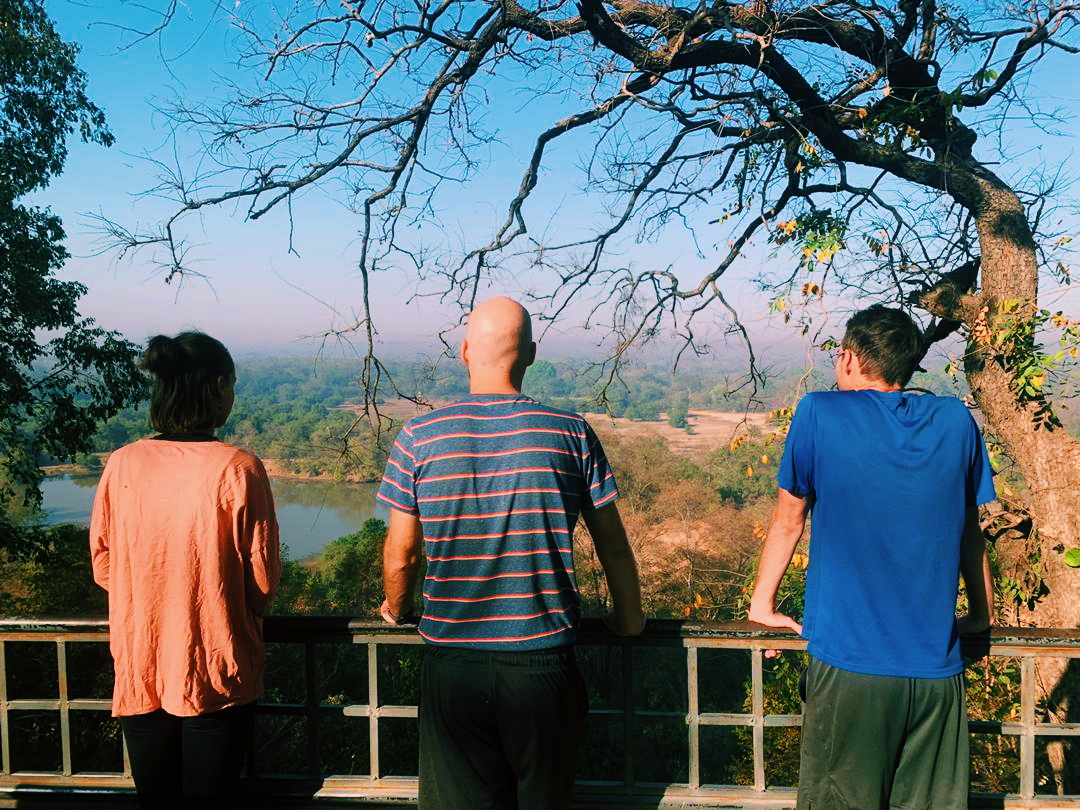
Long time no see. A lot has happened since I last sat at my computer and tried to paint a picture of the world which I am trying so desperately to find my footing in. A new year has started, an old year has ended. There have been some incredible highs, and some earth-shattering lows, and many many moments in between. I hope to be able to tell you all about them soon. That the words will continue to flow as they did when I started this, but it may be slow. Please, bear with me. I am writing, bit by bit it is all coming together. I don’t know when any of it will be finished. But I hope when it is, you’ll all be here to read it. Hopefully the gap between posts will shrink, as there is much to say. Until then, here’s what my world looks like right now.
The world is burning down around me. There is an eerie glow on the horizon as the sky darkens, a sunset to the North and East specifically for those who live close to the burning underbrush which rivals the sun as it takes its place behind the haze. Every morning new fires add their gray smoke to the dust-filled air that has forced a cough deep into my lungs that I may never be able to shake.
The farmers are burning their fields.
As the Earth becomes blacker and blacker around my feet, I cannot help but see a moment of rebirth. Like a phoenix reborn from its own ashes, small green shoots have already begun to poke their way through the dry soil and ash which try so hard to stifle they life they so yearn to find above the surface.
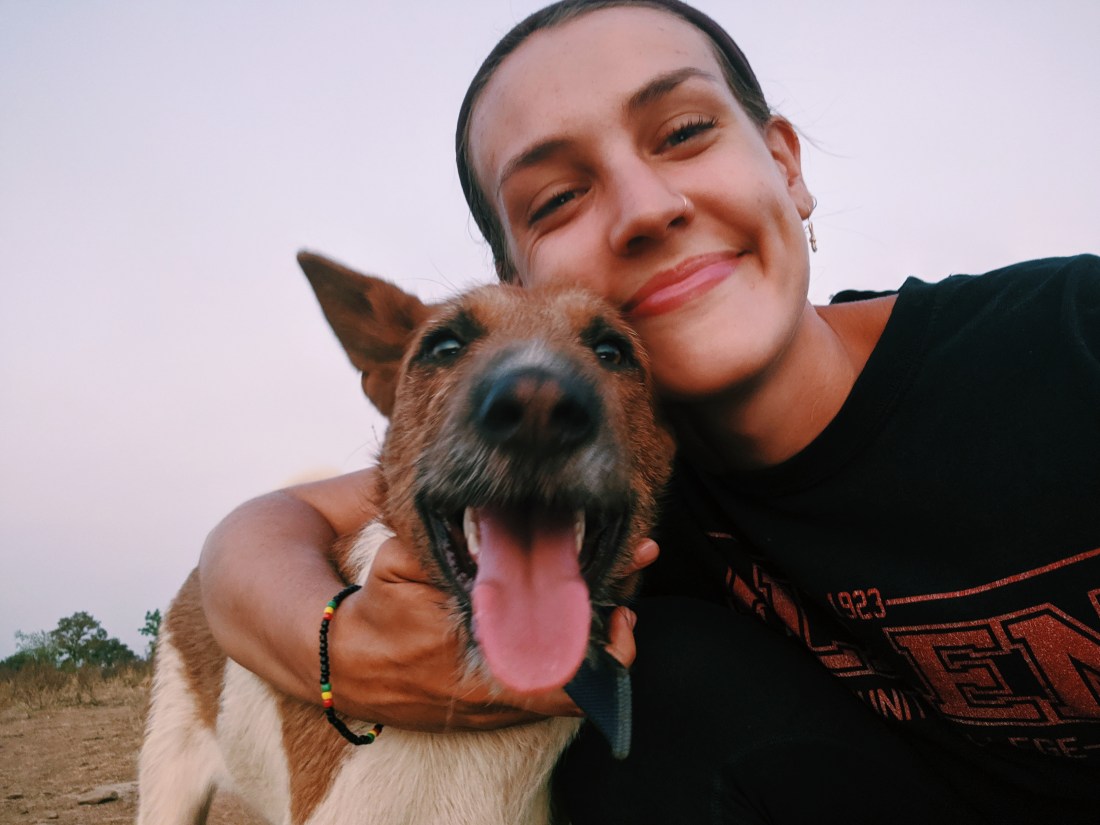
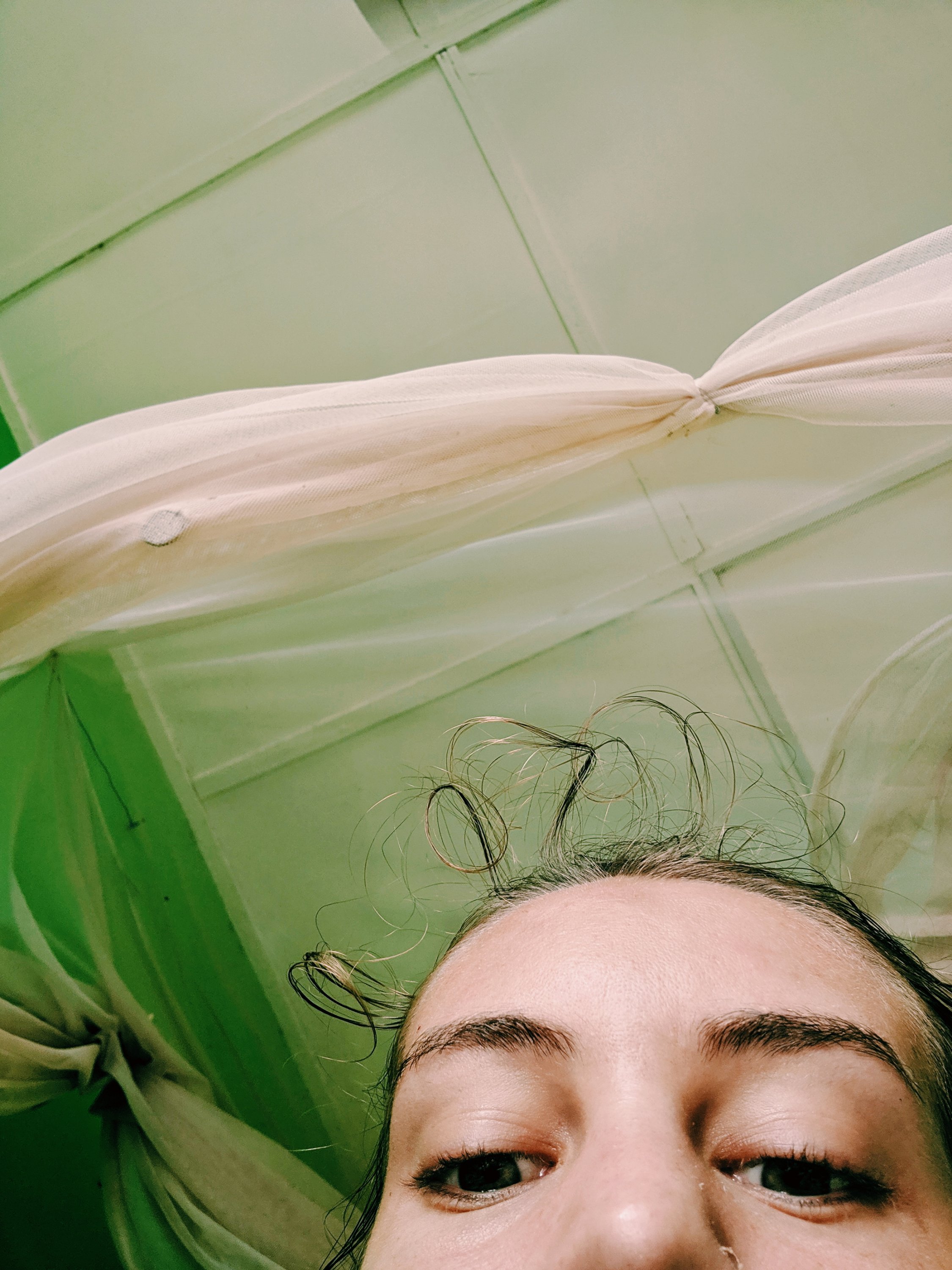
It’s a new year. A new decade. A new moment of life every morning my eyes open to the white netting above my bed and my dog scratches at the door desperate to see what is new in this ever-changing landscape today.
Twice, the path of my bicycle has taken me through the flames that are slowly eating away at my new home. The heat from the fire licked my cheeks, and floating bits of ash moved over my head carried by the wind which have replaced the rain until they are replaced by the scorching sun. Both of these times I have come out the other side of the fire feeling like part of my old self has melted away. My own personal phoenix rising.
It’s naive of me to think this fire will leave me permanently changed. That the heat which they wrap around the dead and dying vegetation like nooses will leave any lasting impression in my brain. In time the scar will even fade from the earth around me. Tall stalks of corn and soybeans will grow once again. I know this only because this is tradition. This is not the first time the Earth has burned here. And it won’t be the last. Whether this is good or bad I don’t know. I dare not make that judgement.
All I know is this. Through the fire, through the scorched earth, through the winds which whip smoke into my eyes, I still ride. Though the road slowly is becoming more like the soft sand of a beach, threatening to knock me from my bicycle at any moment, it has yet to throw me. There are times when I must get off and wade through the loose soil until I find solid footing again. But sooner or later I’m on my way again. Leaving behind me the blackened ground, the ruby red flames, and some piece of the doubt in my mind that I’m heading in the wrong direction as I fly down the hills, cool breeze blowing back my hair, a small smile breaking across my face.
Flashbulbs pt. 2
A Fish Out of Water
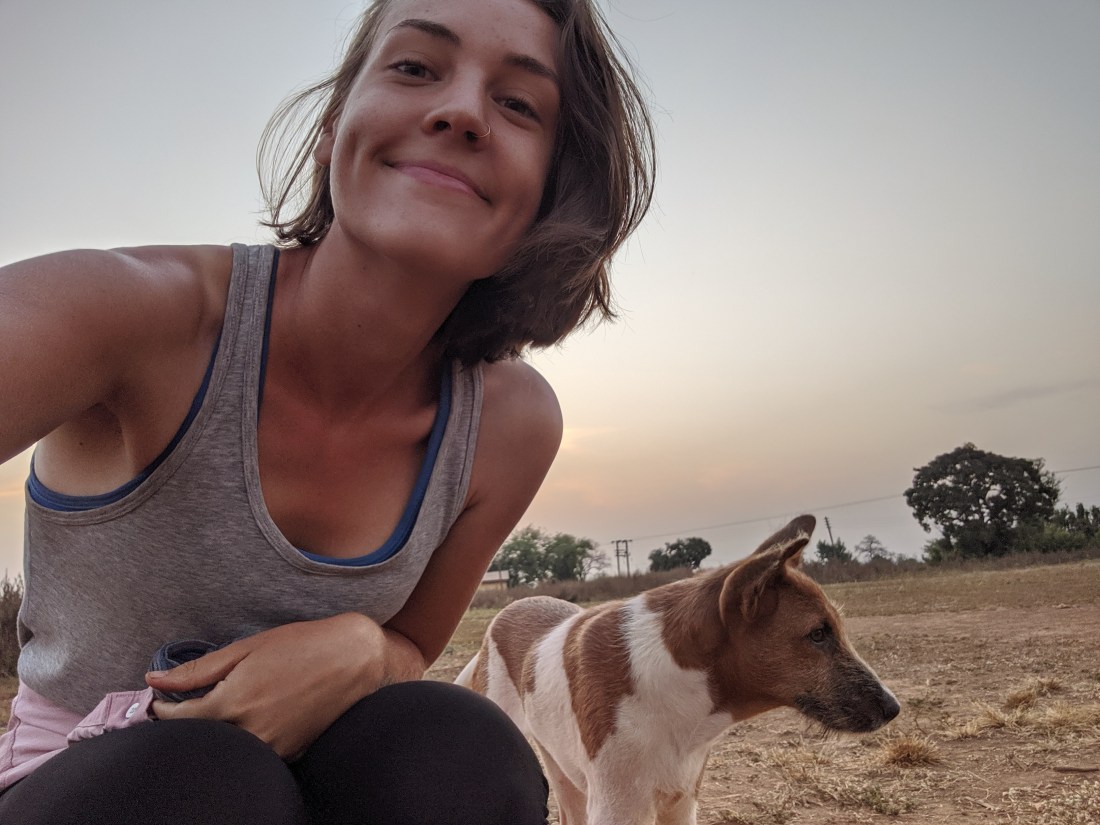
It’s been a while. In some ways many things have happened, in others very little has. The rains have stopped for the year, and the harsh sun of the equator has dried up what little water had not yet found its way underground. With each step a cloud of red dust rises from the ground coating whatever surface it can find to land on. And I am still here. Half a year has passed since I packed myself into three bags, left behind comfort for uncertainty, blending in for standing out, and complacency for adventure.
Most days I still feel like I am drowning. Kicking wildly in some last attempt to find footing in unknown soil. There are days, weeks even, where the thought of the suitcases stuffed under my bed draws me in. That I could so easily fill them once again and stand by the dusty roadside waiting for a bus to come and drag me back into the comforts of life I once took for granted. But yet something keeps me here. Some magnetic force pulls me out of bed each morning before the sun has risen, nudges me to school, into the classrooms with the children who I’m not sure have understood a single word I have uttered to them the past three months. Maybe it’s pride, maybe it’s the overwhelming fear of failure that has followed me for much of my life, but I hope it’s much more than either of those things.
There is too much still to know about myself in this place to leave now. The mango trees and the okro plants have so much more to teach me about thriving where you find yourself planted. The students, the small children who roam the village in the late afternoon once the heat finally begins to subside, the women at market who take me in each week, these people have more to show me about who I can be and what I can become.
At times I’m not sure I have changed for the better. I fear I have become bitter and jaded, my perceptions skewed by my own bias. I am faced with the pungent reality of every emotion that runs through my veins over the course of the day. Good or bad, positive or negative, emotion demands to be felt here. They cannot be pushed away, forced down somewhere to decompose into the mild mannered half-dead feelings of my life before I set foot in this country. Over time though, I will learn not to be scared by the emotions that burst into the spaces in my body somewhere between my brain and my heart. And I’ve come to realize that it’s okay if this is the only thing I feel I have achieved here. We are not superheroes, we are not saviors. We have been tasked with one job, to show up every day, to put a foot forward (whether it be our best or our worst, whichever will do), and to open our ears and eyes to the world around us.
In the end the only change we may see in our new small world might be when we look in the mirror. And regardless of what others will tell you, that’s ok. We are not measured by the things we create. They are temporary. We are not measured by what others perceive as our success. It doesn’t have to make sense, to feel right, to look different, to anyone but you.
And if we do this, if we keep this in mind, there is no way that we haven’t left some small mark on these our temporary, but eternal, new homes.
Riding Bicycles Downhill and Other Fonts of Happiness
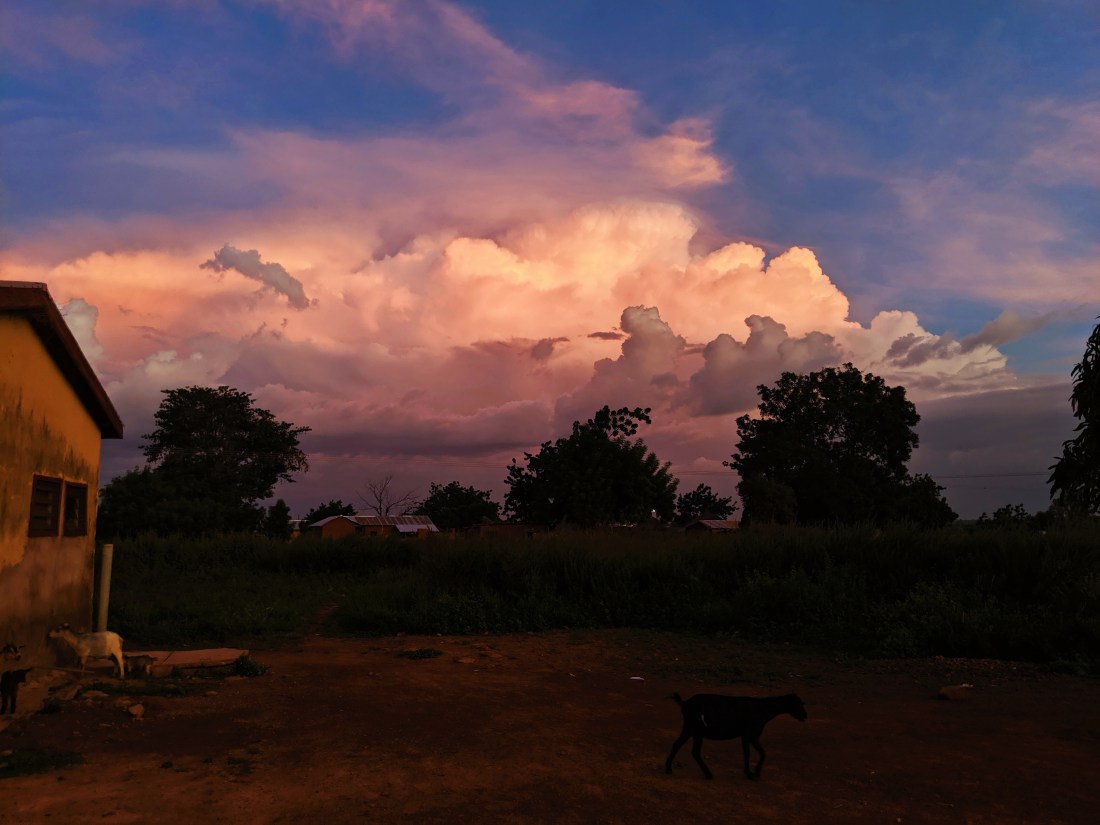
The sun is getting stronger as the rains recede back into their far away hiding places until the next time they will come to soak the dusty ground. Early afternoon has become plagued with heat like a heavy blanket which the small winds that whisper through the dry leaves on the trees cannot hope to lift. My eyes try to memorize the greenery of the landscape outside my door before it falls prey to the scalding power of the ray’s from our mother star and turn to orange dust like the rest of the town.
It is easy to lose sight of the green in all the dust sometimes. There are moments when the clouds of red Earth become so thick you feel you can’t walk forward without waving your hands wildly in front of you, trying to create a break for sunlight to stream through and light your way. It is easy sometimes to lose sight of what is to come. To be stuck in the muddy water of the moment, unsure of which way to turn, or how you ended up in this unfortunately damp place to begin with.
But as I fumble through each day, sometimes feeling lost, sometimes feeling on my way to being found there come moments that blow away the dust from my vision and my mind. They appear out of nowhere, I can’t seek them out, but these springs of joy in the desert, my small oases of happiness take as many forms as they can find.
Here is a short list of the fonts of happiness that have taken me by surprise:
1. Finding a fruit at market besides oranges and bananas (hello mangoes, papayas, and pineapple)
2. A child calling me by my name and not “siliminga”, the generic term for a white person
3. My students bringing me a giant bag of spicy peppers that I could never use all of in my two years here
4. My puppy chasing goats on wet concrete and sliding off the end of the school veranda when he can’t stop
5. Riding my bicycle fast enough downhill that I can physically feel my anxietes flying away
6. The electric blue birds that sometimes fly overhead when I am walking Alfie outside
7. The one woman at market who speaks no english but is always excited to see me wall by her small store
8. The small girls who work at my favorite store in the district capital who like to play math and spelling games with me when I stop by
9. Understanding and being able to respond to most of a conversation with anyone in my town in Dagbani and seeing how happy it makes them
10. Waking up to my puppy curled up in the bend of my knee in the morning
11. Cold water
12. Sunsets
A Note on Lonesomeness
You’ll have to forgive any morbid or unsatisfyingly demure ideas which present themselves in these next few paragraphs. Lonesomeness will do that to you, although it is often it’s brother loneliness that is more feared when we think of our existence. You can also thank one Mr. Kurt Vonnegut, although he left this Earth years ago, for planting the seeds of rebellion against my own mind as I work my way through his entire anthology of satire and disappointment at the state of the world in the prime of his creative yet knarled brain. Perhaps you can go lay some flowers at his grave for me if you happen to be passing by.
Up to and including this point in my life I have fit nicely into small spaces. When my small space involved a wooden bar and 100 different bottles of liquors and liquers (of which I still don’t understand the difference), someone once described me as more country mouse than town mouse which I still consider to be the most accurate depiction of myself ever given to me by another person. And this country mouse finds peace and comfort in the quiet of small towns and ocean waves, and being alone.
In one of the many brilliant books by Kurt Vonnegut which my hungry eyes have scarfed down in some attempt to fill the cracks and crevices of my brain with the greatest form of nonsense* a political campaign is run with the slogan “Lonesome no more”. Which, in my humble opinion, is the greatest hurdle in the race from beginning to end or wherever to whenever, or what have you. It is a slogan I am working my best to adopt in my time here. I conquered it’s brother “lonely no more” many years ago, long before I set foot in Africa. Having grown up in a fairly small town, spending my vacations and later on my summers as a dutiful member of the employed college students working through their summers in an attempt to keep their heads above the waterline of debt which so often swallows us whole, in an even smaller space and then moving on to a small college in a small town surrounded by a small group of friends to whom I probably owe at least some portion of my life, I conquered loneliness. In the small spaces of my youth I got used to being on my own.
My poor brain got so convinced at some point that I was meant to be on my own that it began to tell the rest of my body that being around people was too much of a hassle and that after a time of togetherness it would begin to search rapidly for solitude and the loneliness it so desired. So I have conquered loneliness. I have taken it in and twisted it around into a cushion of relief I fall back when even the slow pace of the country even becomes too much for this mouse.
Lonesomeness unfortunately cannot be so easily conquered. The small space I’ve fit myself into now is perfectly my size. Loneliness has not yet found a way to creep out and twist itself back into what so many fear. I spend a great deal of time alone, there are days I almost forget what my voice feels like when it vibrates in my throat. There are days when hiding away within the four walls of the one room that serves as my whole abode is the most calming and welcomed experience in the world.
It is only in my thoughts that I find lonesomeness, not in my existence. It is only empty synapses between the neurons which fire one after the other to send messages round and round inside this big ole brain I have, where the idea of lonesomeness creeps in. My body could go on being alone for the rest of it’s time here on this wildly spinning sphere, but goddamn it if my thoughts can be left unshared for even a minute. And it is because of the wonderful, beautiful, horrid invention that is the internet that lonesomeness can be pushed back again and again and again. It is because I can press down keys in what someone once decided was not a completely random way, to create words that try to capture the sparking of the neurons within my brain. To catch the messages they send on some sort of flypaper that becomes some version of what I send out into the void.
So this country mouse has become dependent on someone being there only when she needs to feel that her thoughts are being heard. In a way this form of egotism and self-importance, in thinking that there would be anyone who is willing to partake in my exercise in trying to beat lonesomeness as well as loneliness, has created a new monster akin to narcissus. But for now, one monster is enough to befriend at a time.
Thank you all for joining my campaign. Know that lonely is not something I am afraid of, and as long as there are still those interested in the words I somehow weave from the tangled web inside my brain lonesome shouldn’t be either. Also thank you to Kurt Vonnegut for making me believe I can say something without having to believe it is terribly important and still think it is worth saying. I can only hope that was in some way a point you were trying to make.
* All that we create being in it’s own way inconsequential to the goings on in most places around the world, in fact many of the only creations that are of any consequence in the whole history of the human existence have unfortunately been those that end the lives of others whom we have been told are the enemy so we take no mind in the stories of their being blasted away by creations of man that we have lost control over.
From Under the Nim Tree
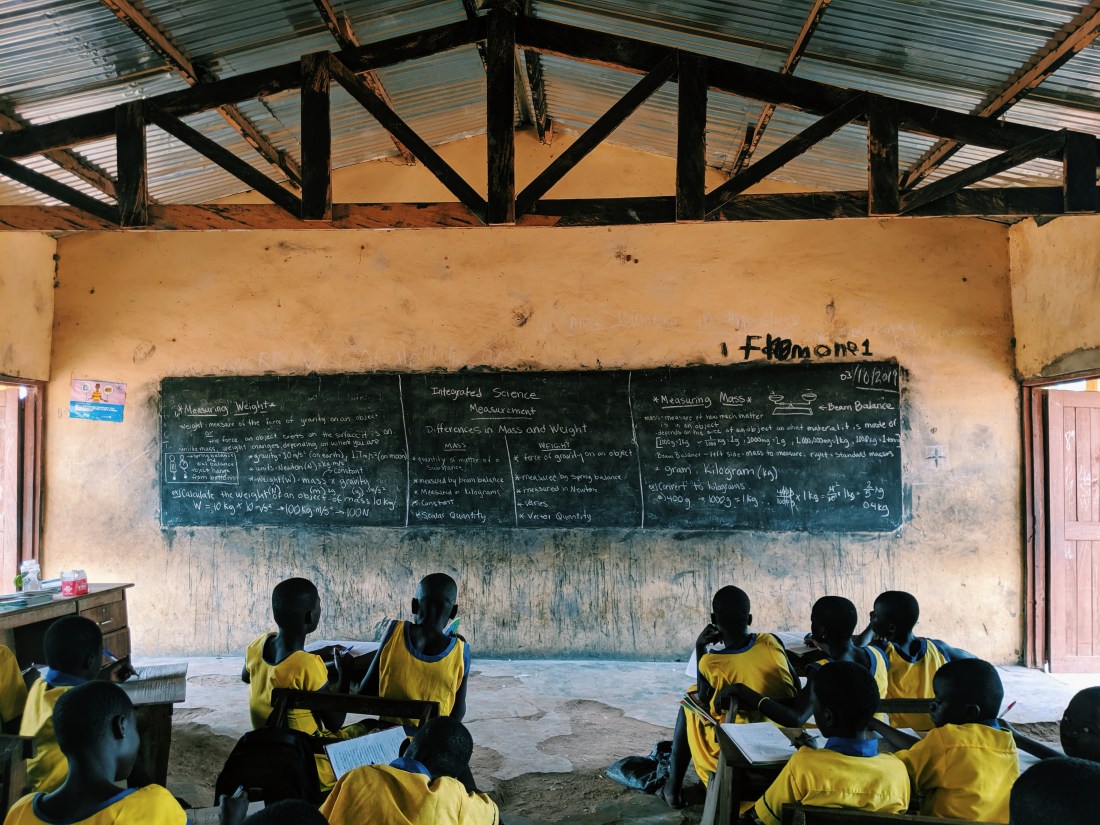
Just over the wall at the far end of my compound sits a red and yellow color-block building. The doors are held shut with silver padlocks, but the windows blow open with the slightest breeze. I don’t know who they aim to keep out of the concrete walls of the three large rooms and one smaller which smells strongly of the black mold which peeks out of the falling down ceiling. This small room is filled with books and papers, marking the years past in some sort of organizational system that my eyes fail to follow if ever I am to step inside the office. This is the schoolhouse. Its steps have crumbled and the aluminum sheets which make up the slanted roof let the sun shine through leaving the concrete floor freckled as well as dimpled. Three wires and a tall pole bring electricity to each of the classrooms where sockets hang empty from the ceilings without bulbs to brighten the days when the storm clouds hide the sun.
This building is where I spend most of my days.
During the week I sit at the small wooden table in the shade of the branching Nim tree watching the students park their bicycles in rows before squeezing themselves into desks which they outnumber 4:1. On these days the school house lives and breathes, it’s heart beating in time to the sound of the cowbell-like instrument the one boy with a watch beats to signal the start and end of classes. It is hopeful and vibrant and though I don’t speak the language these children let flow easily from their tongues, we sit content in our confusion trying to figure each other out.
On the weekends however, this same building seems to let out a sigh it has been holding in all week long. Its doors are shut leaving only the windows to get in or out. The bugs and birds use this option more often than not. The goats and sheep sleep soundly on the small verandas which they will soil over the course of the two days where there are no students to shoo them away and clean up their mess. These are my favorite days in some ways.
There is a small spot on the back corner of the school, where the aluminum roof has peeled away letting the rain wash the concrete underneath whenever the clouds open and soak the town. It is here I like to sit. In the morning the shade from what remains of the roof covers where my bag and my body take up space. From this vantage point I can see out over the fields of groundnuts, through the scattered trees, and to the horizon line that cuts the green from the blue.
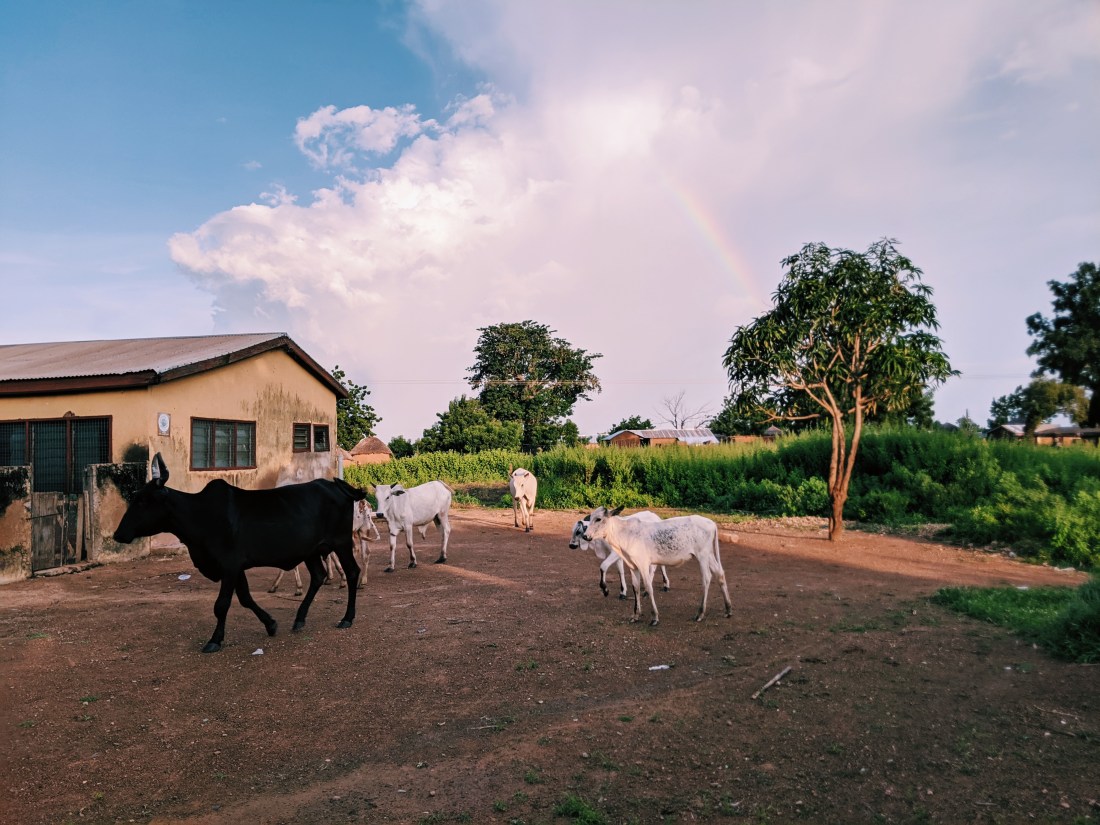
It is a quiet place. Sometimes made noisy by a passing herd of cattle with sagging skin and giant horns, the small boys who lead them onwards following closely behind them. Some days these boys will sit with me, speaking no words, listening to the soft sounds that flow from the phone which sits atop my small bag. Other days they break out their makeshift soccer ball, a lopsided creation made of materials I cannot decipher. Drawing lines in the sand and moving rocks to mark goalposts they play while the herds of great beasts they control stand just off the dirt schoolyard in the thick green, a silent and uninterested audience. I watch them out of the corner of my eye, slowly turning the pages of the book which sits in my lap. Someday I may help them even out their teams, fumbling my footwork, trying to dance the dance they seem to be born knowing.
The hours I spend sitting on and around this building, constantly shifting to escape the sun which turns my darkened arms to red far outnumber the hours I have spent anywhere else. It is the hub of my time here, the nucleus my purpose revolves slowly around. Four rooms of concrete walls with concrete floors, dimpled with holes wider than the desks the students squeeze themselves into everyday after they sing together while marching in place, waiting for their class’ turn to jump up the broken stairs into their classrooms.
It’s not much.
But also, it’s everything.
The Fates (a poem)
The tattered silver strands that the fates weave into our destinies hang low over our heads. Turn your head towards the heavens and find in the air the shimmering strings that hold your body like a marionette, knotted and twisted as they find their way from beginning to end. Wiry fingers knit countless strands together and cut them short with an abandon for life that can only be held by those who can see the whole of the woven creation with a single eye.
They are wild, and cruel, but not without purpose. The web they weave viewed from their perspective on high maps out the entirety of the human existence, balanced on razor thin wire, a tightrope too treacherous for the living to step foot upon, only to be crossed when the flame has been blown out behind our eyes by the harsh winds of the years which pass us quickly by.
There is a method to the madness that lives in the cackles that escape from between the thin lips of the hunchbacked woman who toil over our destinies. Tangling and untangling again and again until our eyes are tired from trying to follow which way they are pulling our limbs by the ribbons tied to our hands and feet.
We must just go.
The spider’s silk of your existence is woven tightly, it will not break as you put one small foot before the next. Whether you step with the fragile uneasiness of the butterflies whose wings brush the sides of your stomach, or let your feet come crashing down loud enough to drown out the tiny pieces of your being crying out for cautiousness.
Just go.
The end has already been woven into the fabric of time. You cannot stare the fates down and ask them to unravel the fibers that sit heaped upon their laps. You can only breathe in slowly, enough to feed the fire burning within, and take your first step off whatever cliff edge you have come to.
Do not worry.
The strings will hold.
Flashbulbs
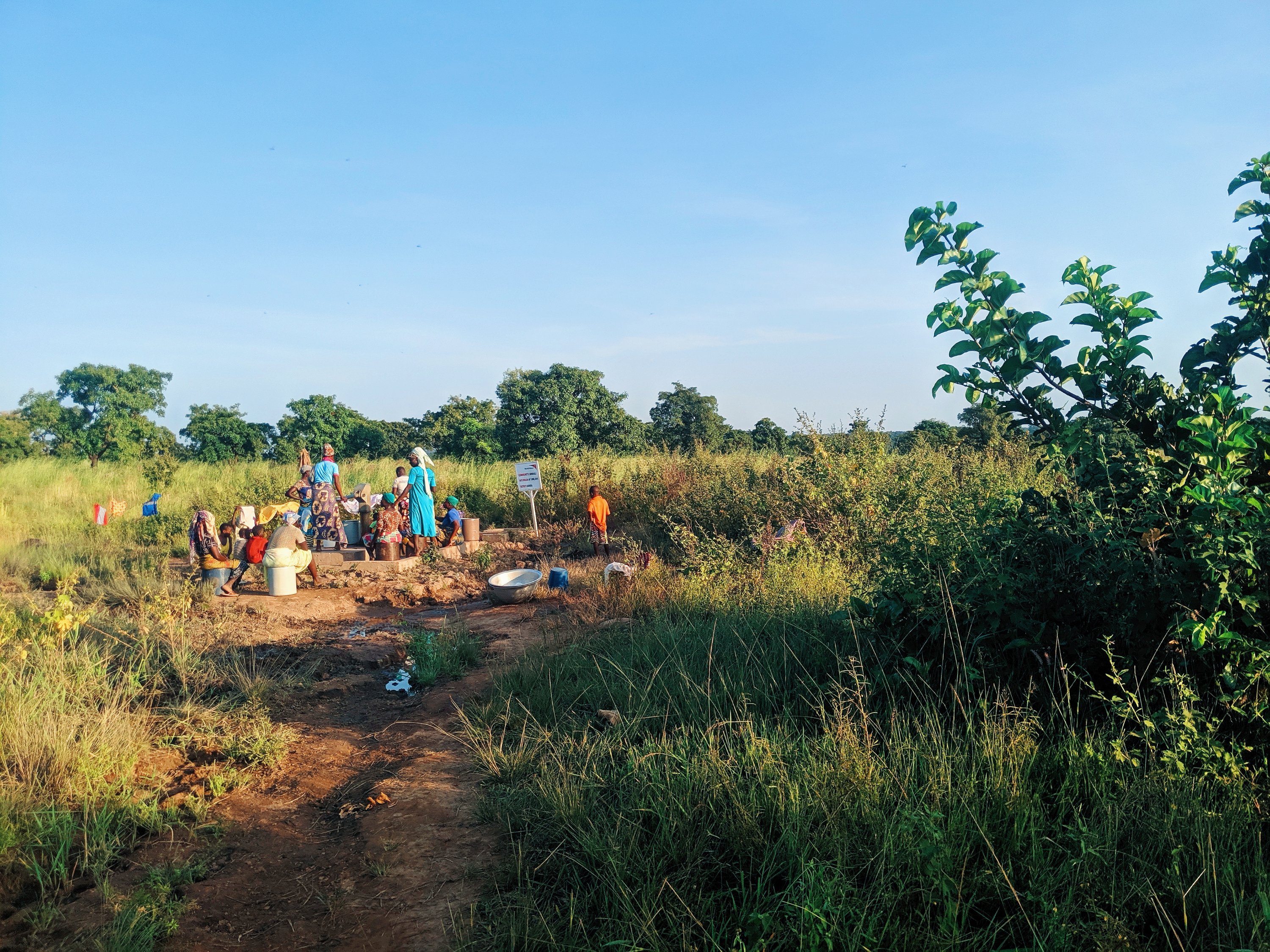
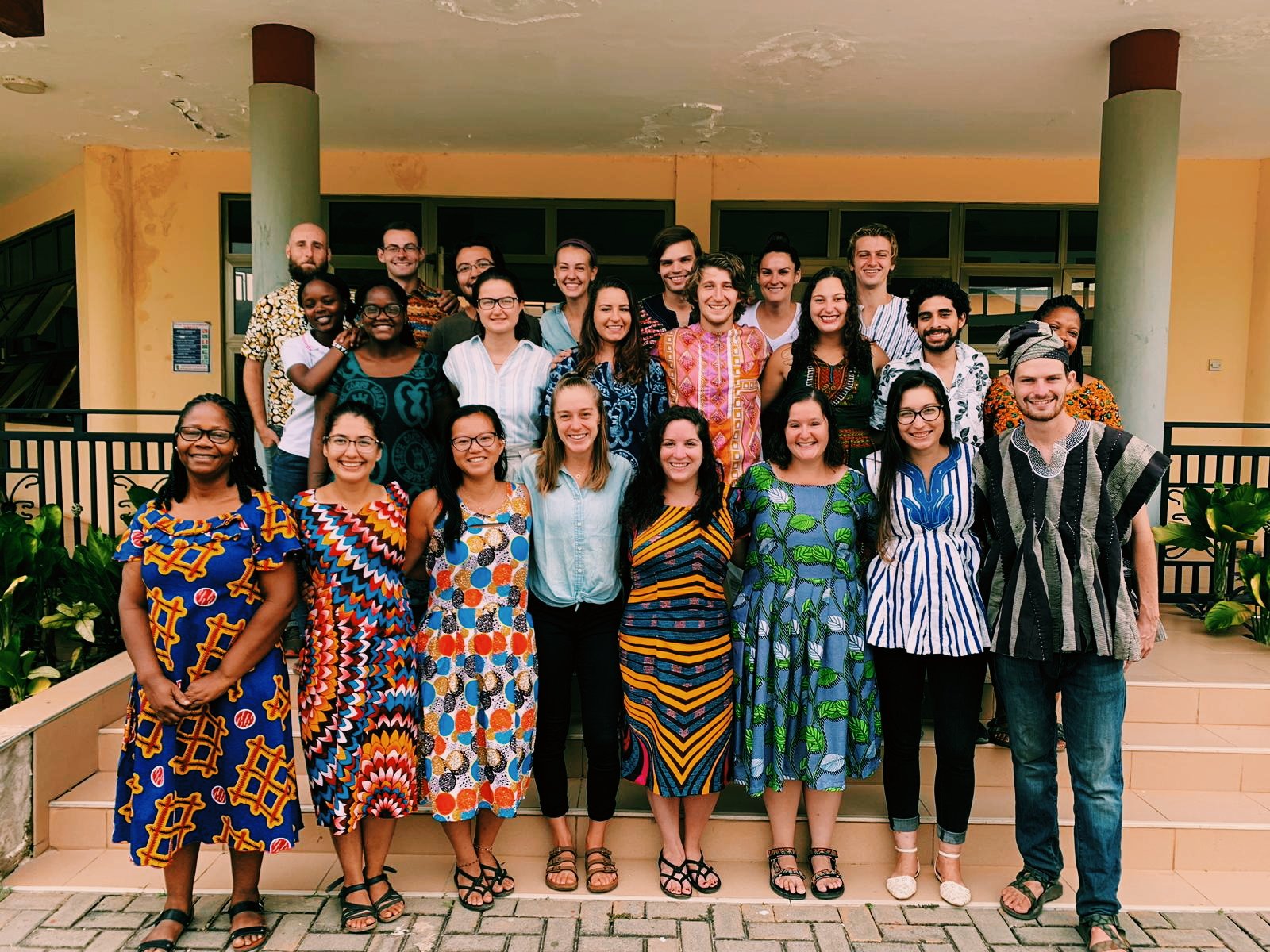
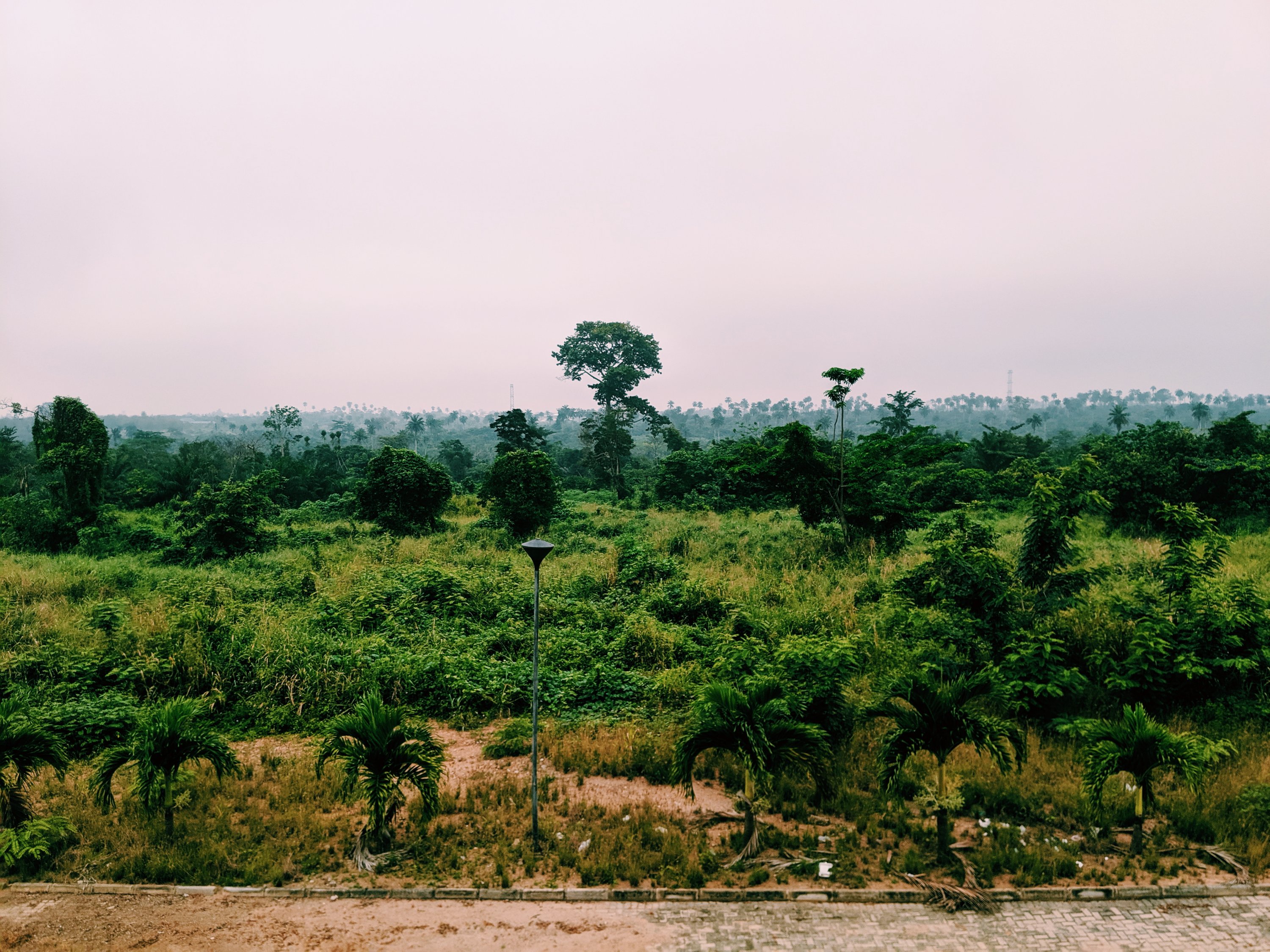
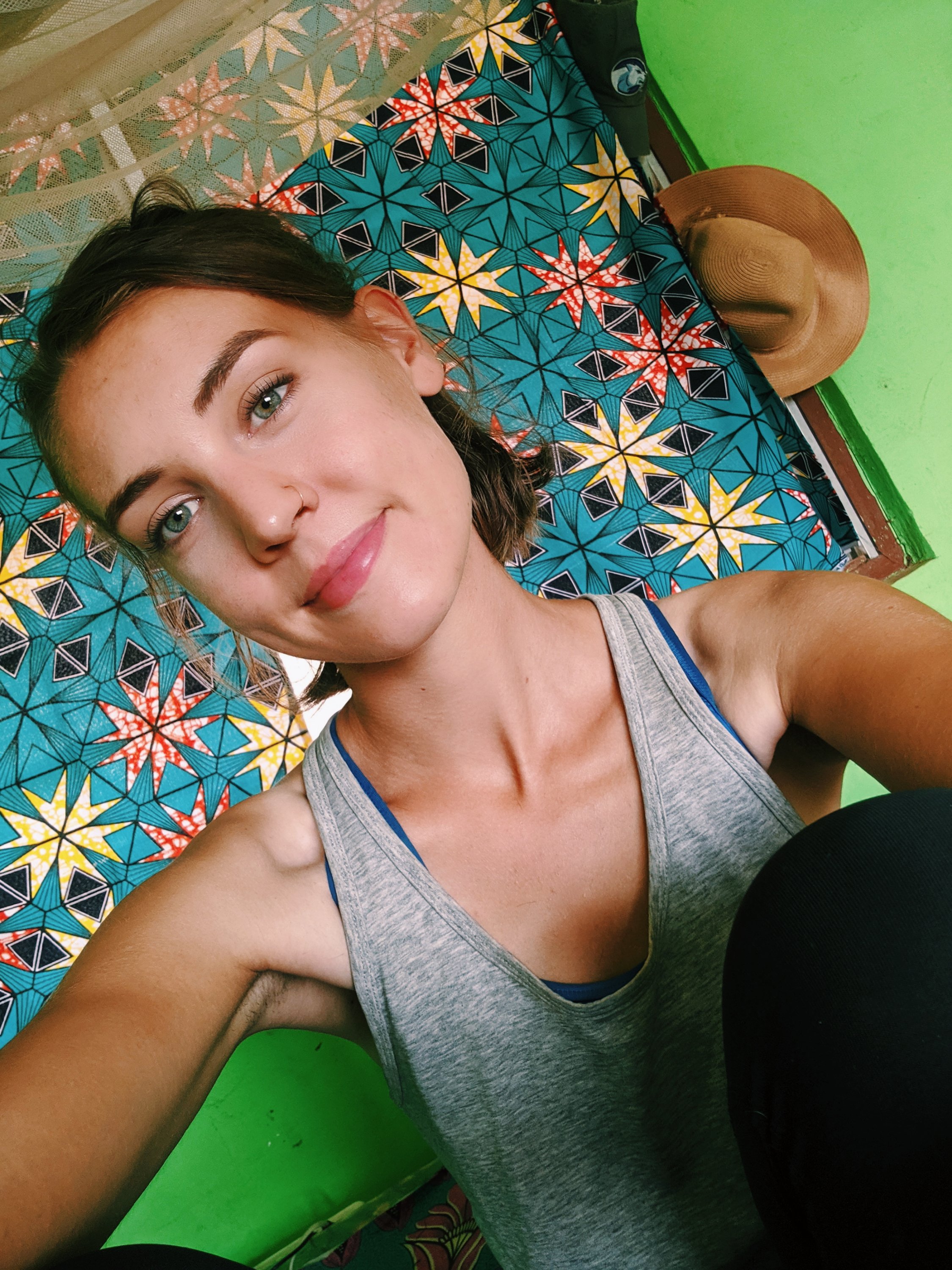
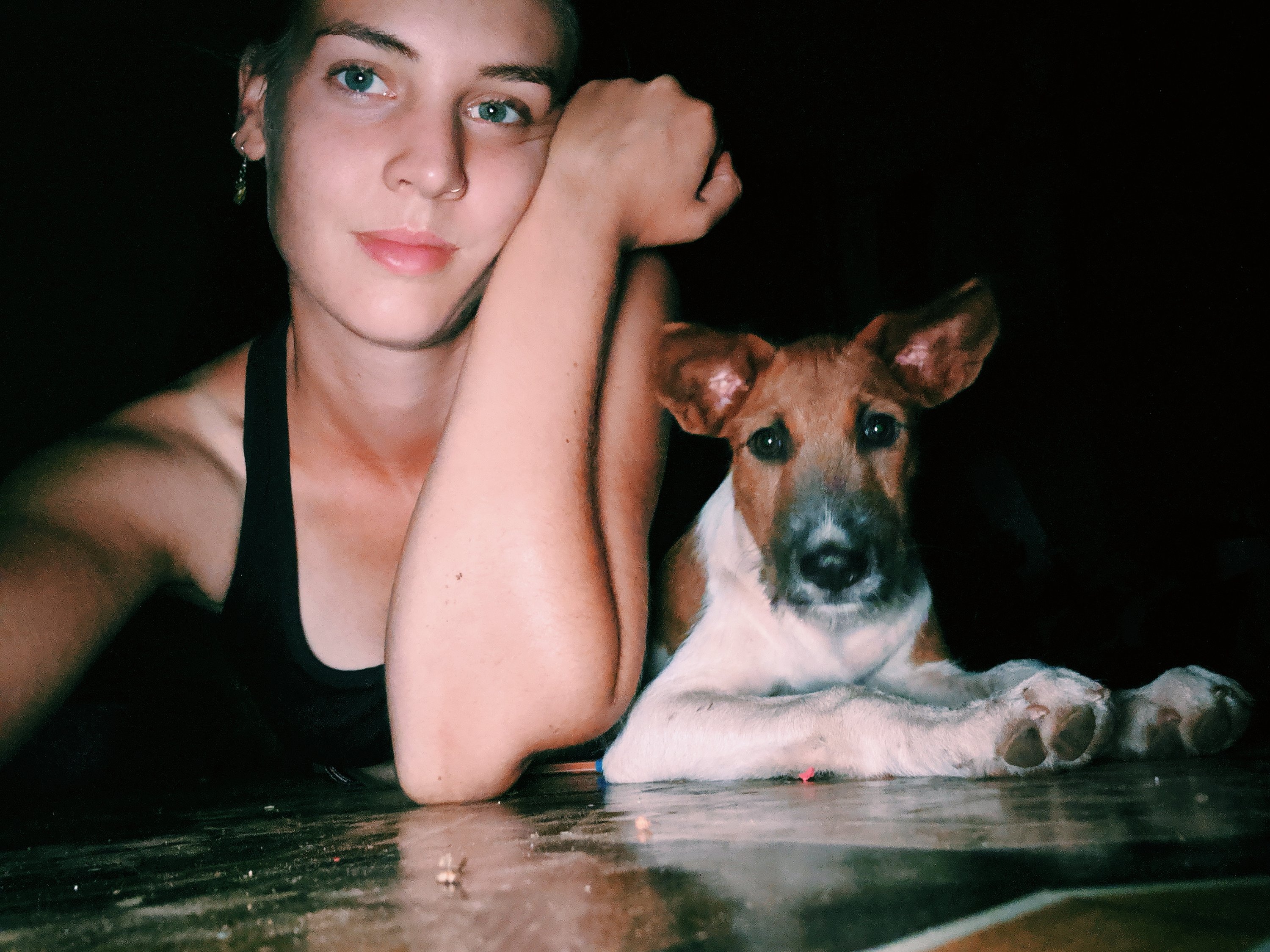
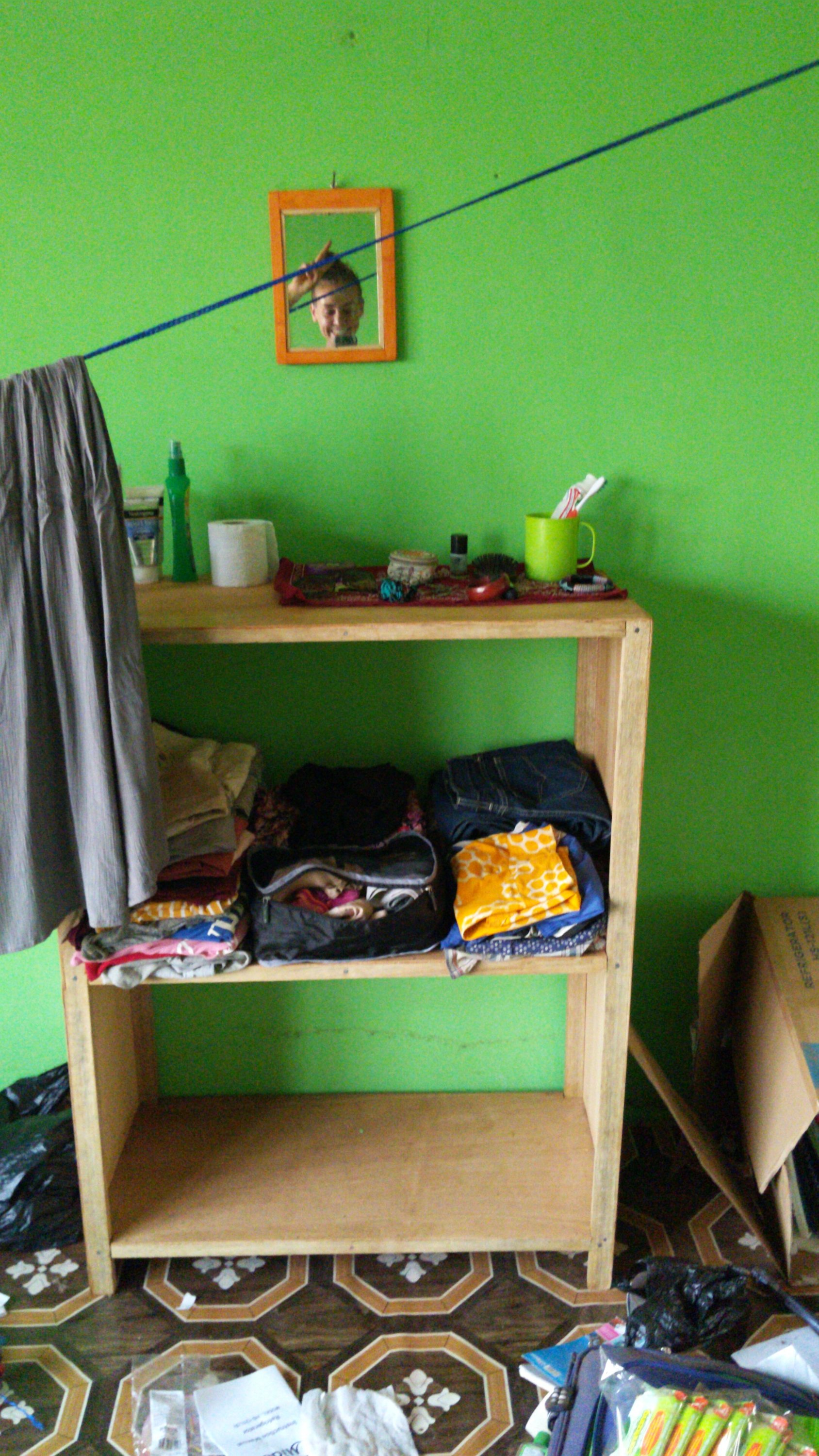
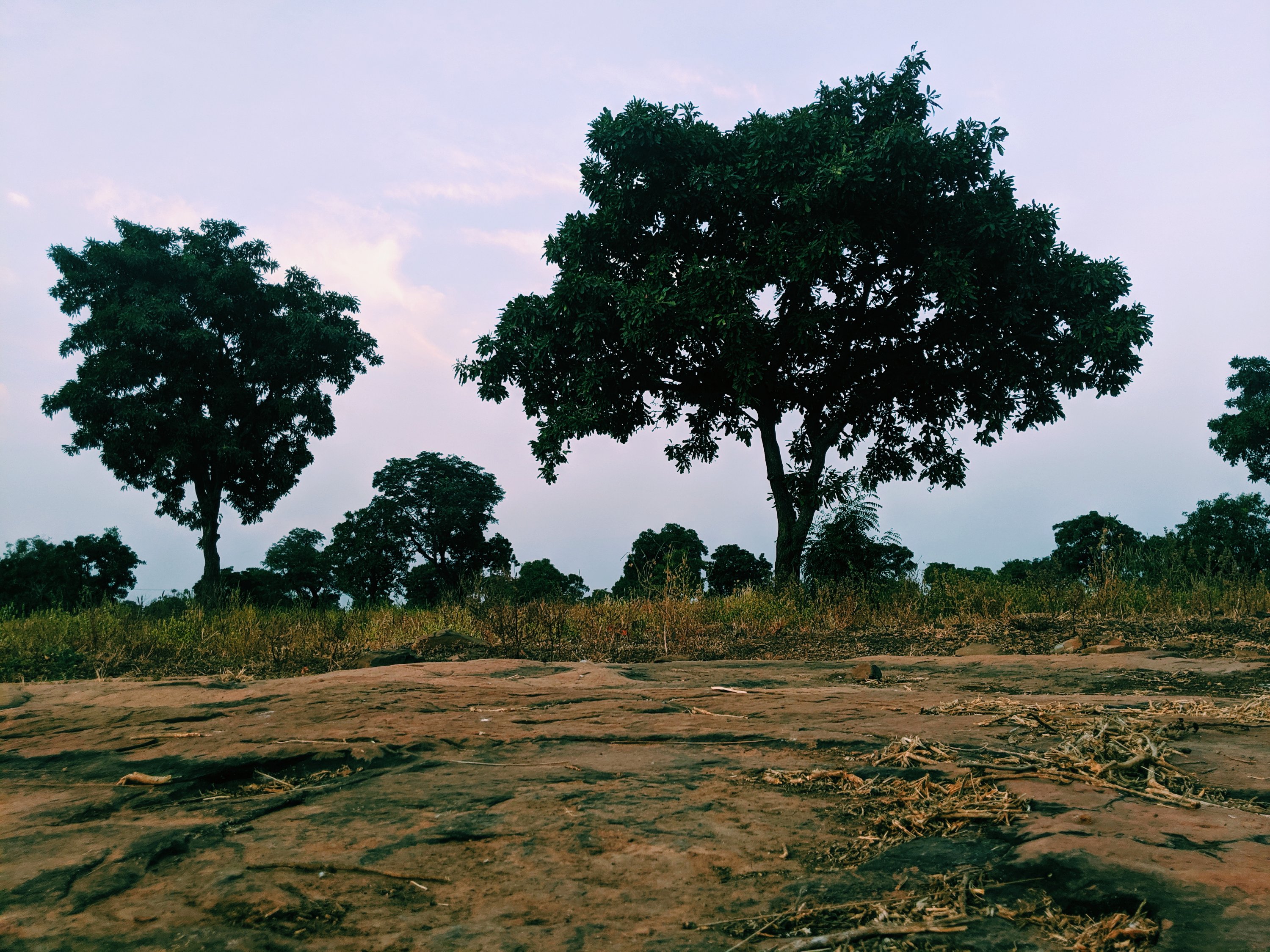
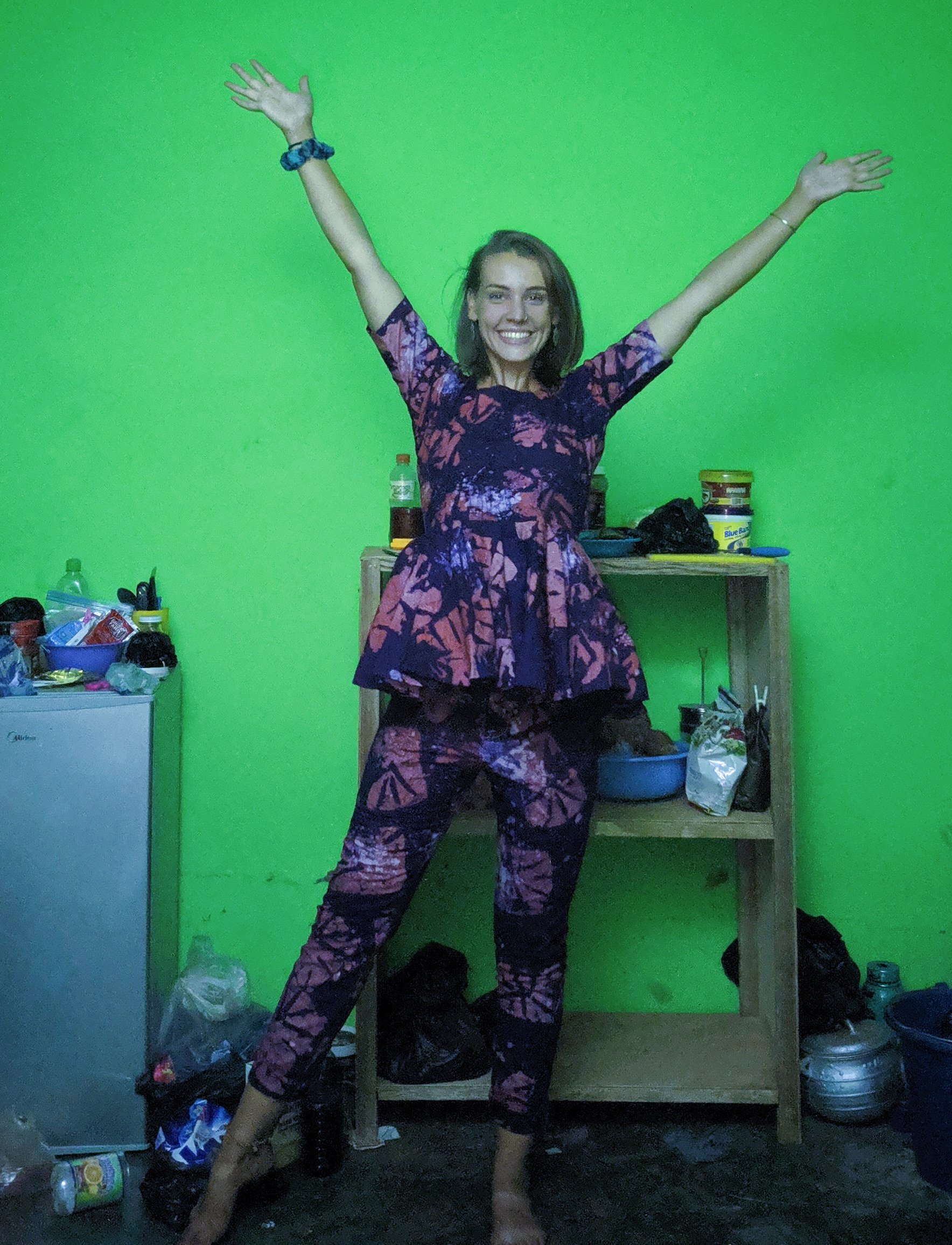
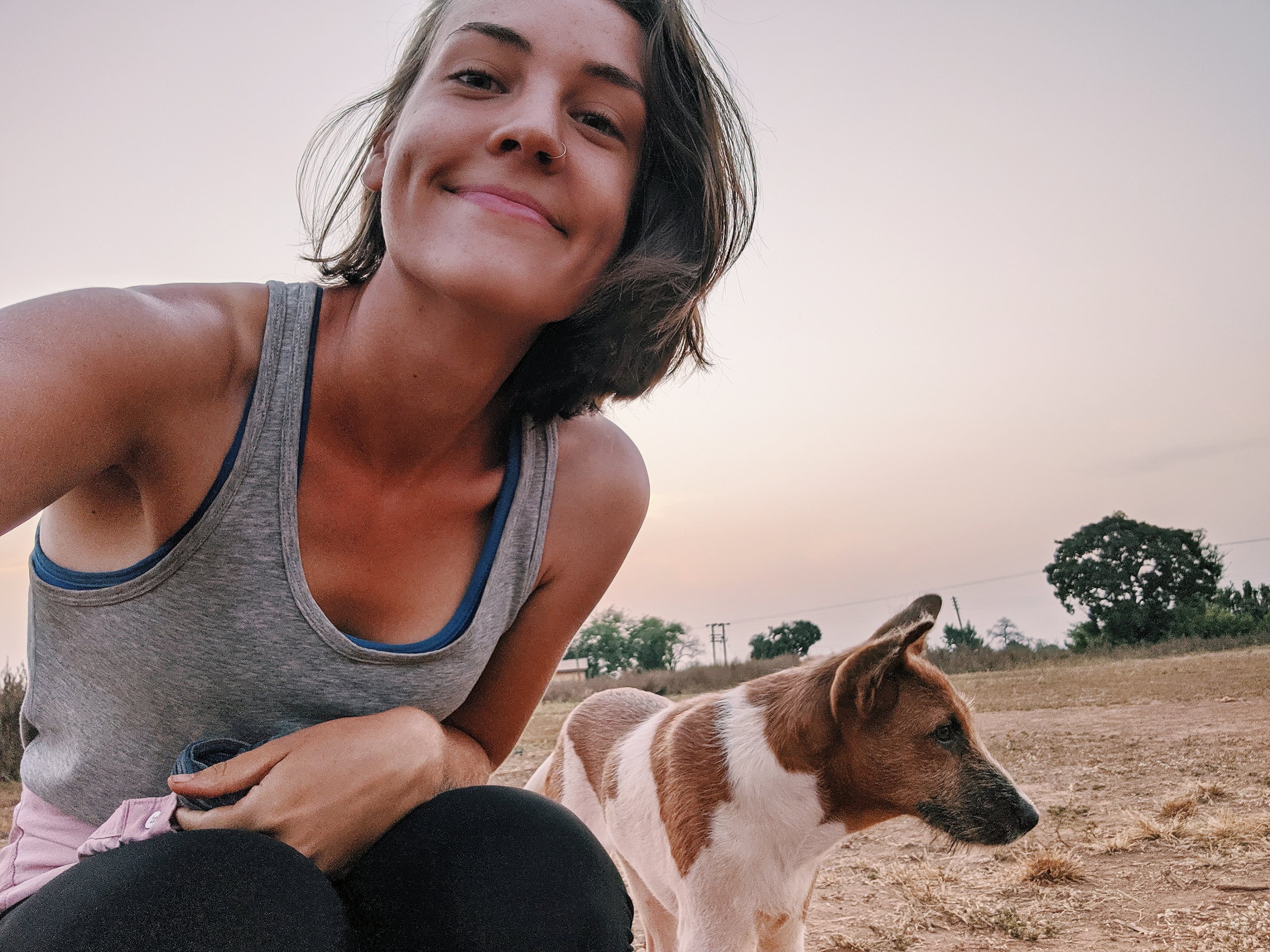
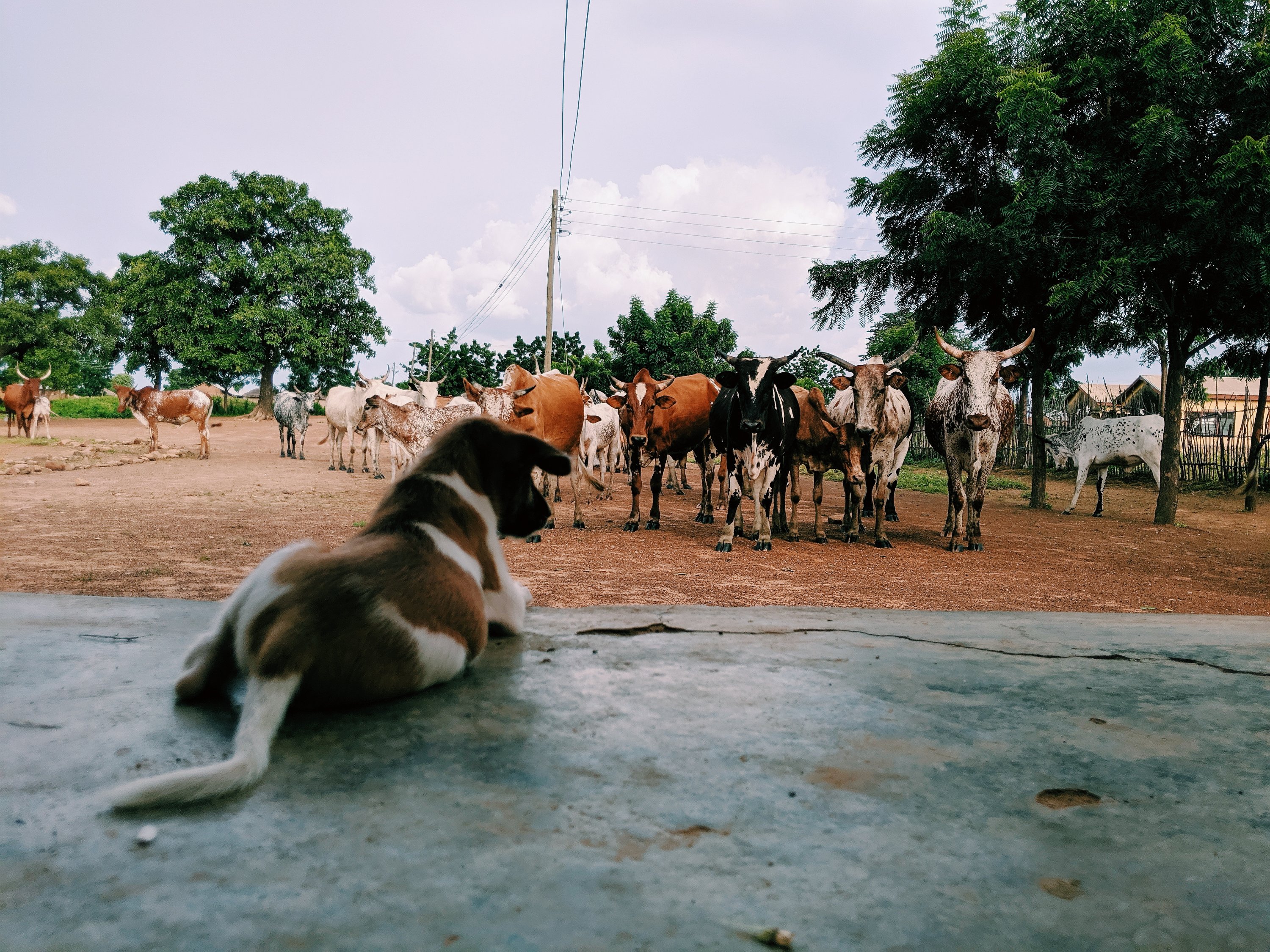
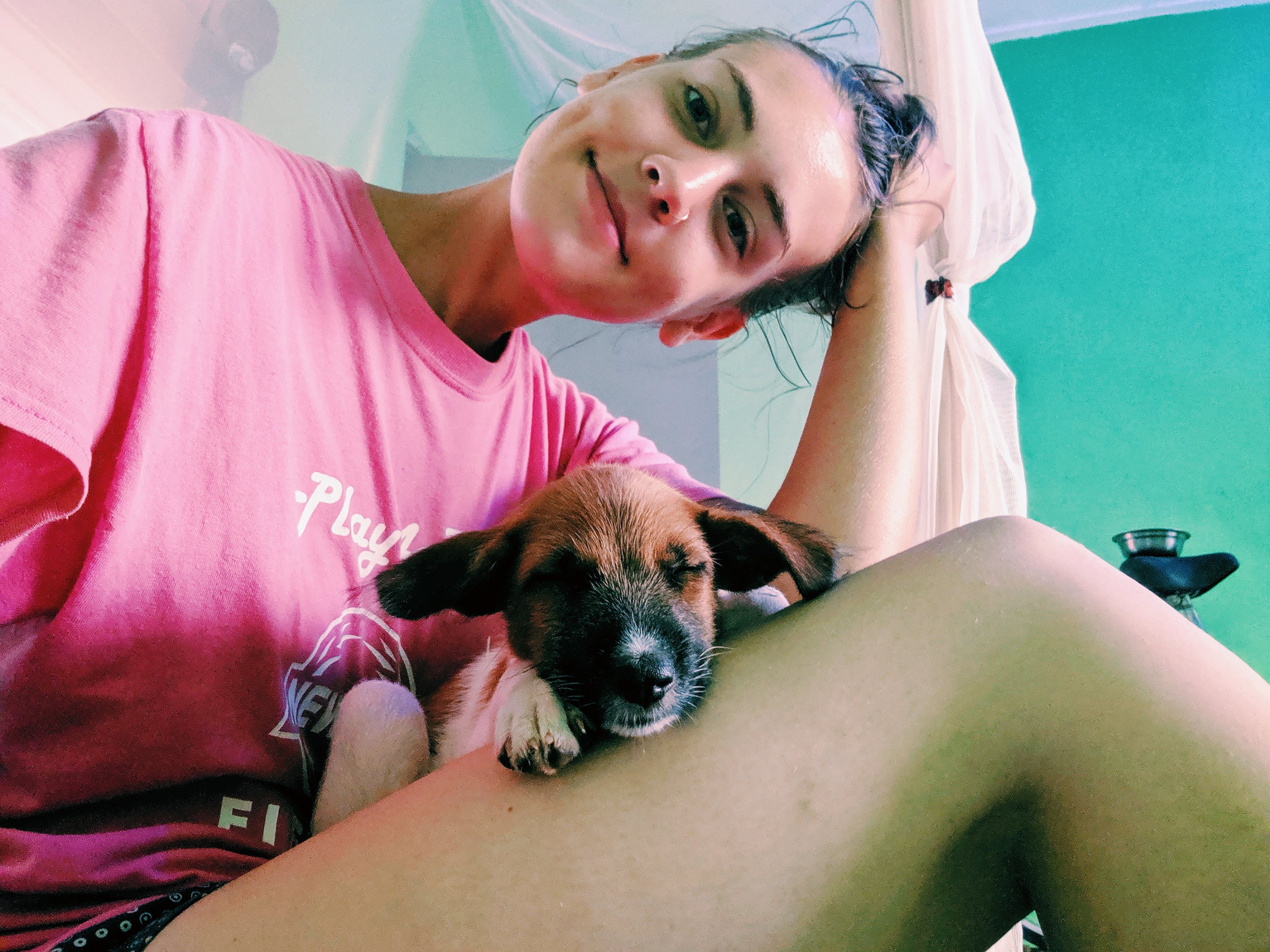
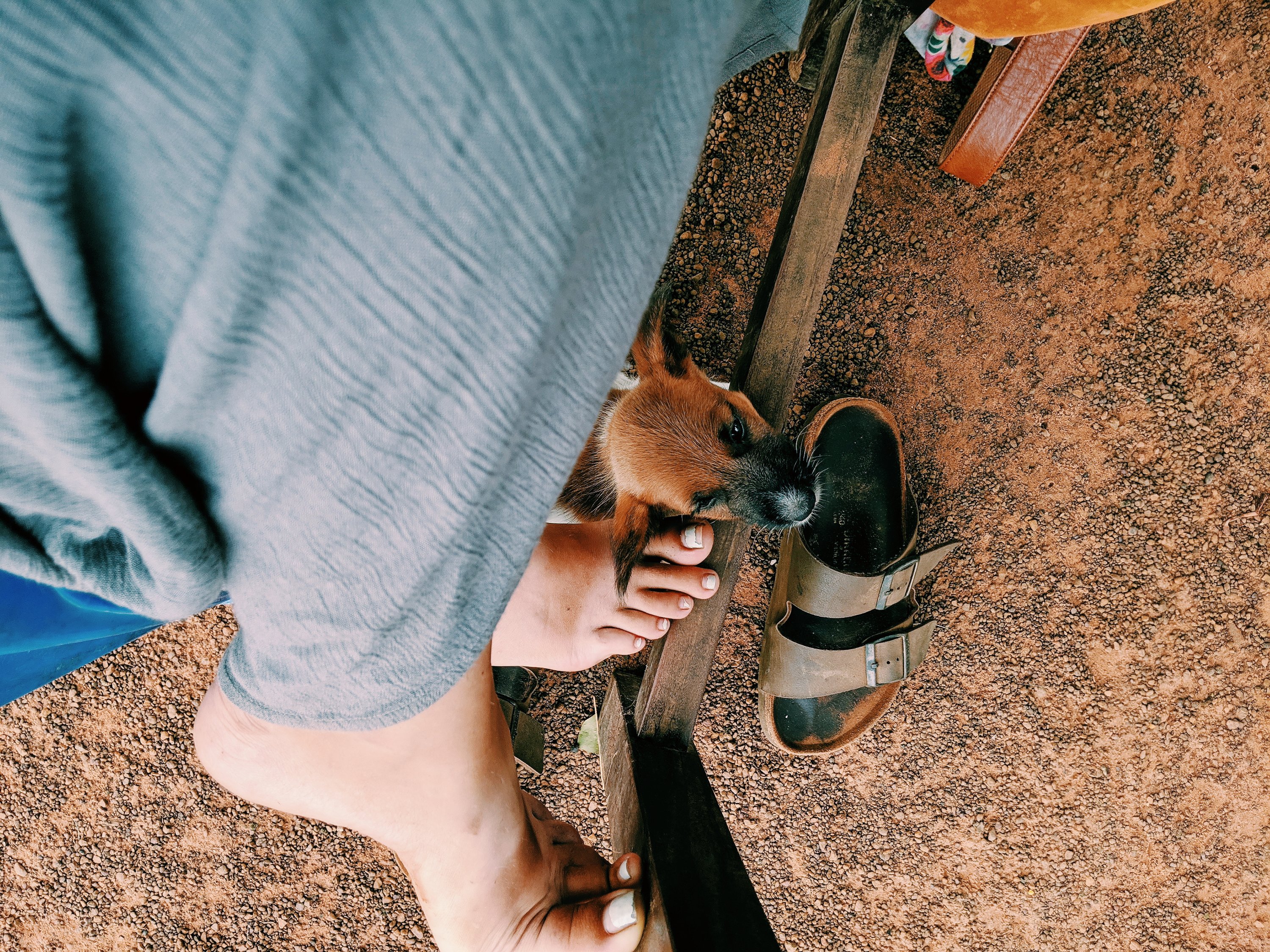
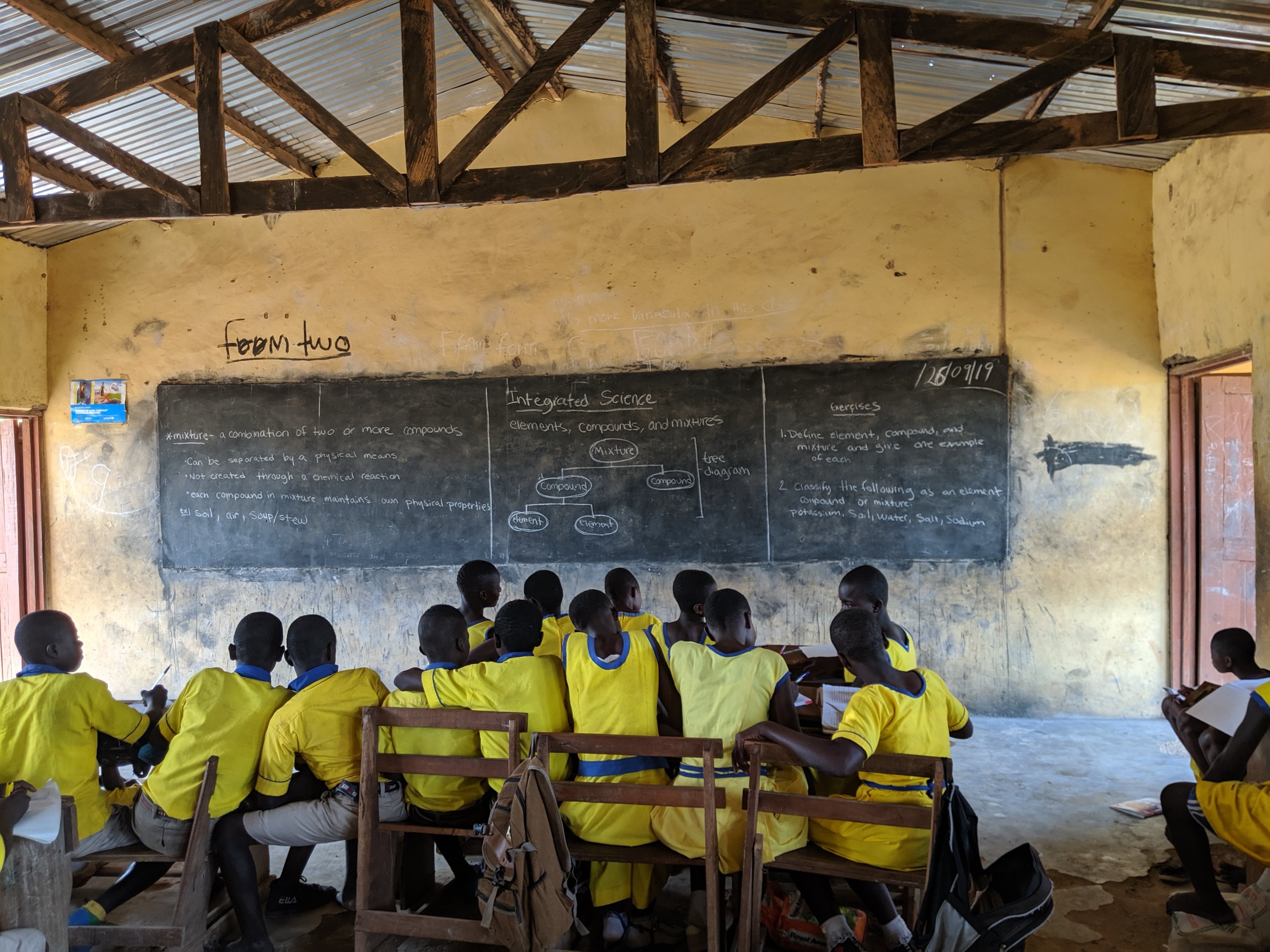
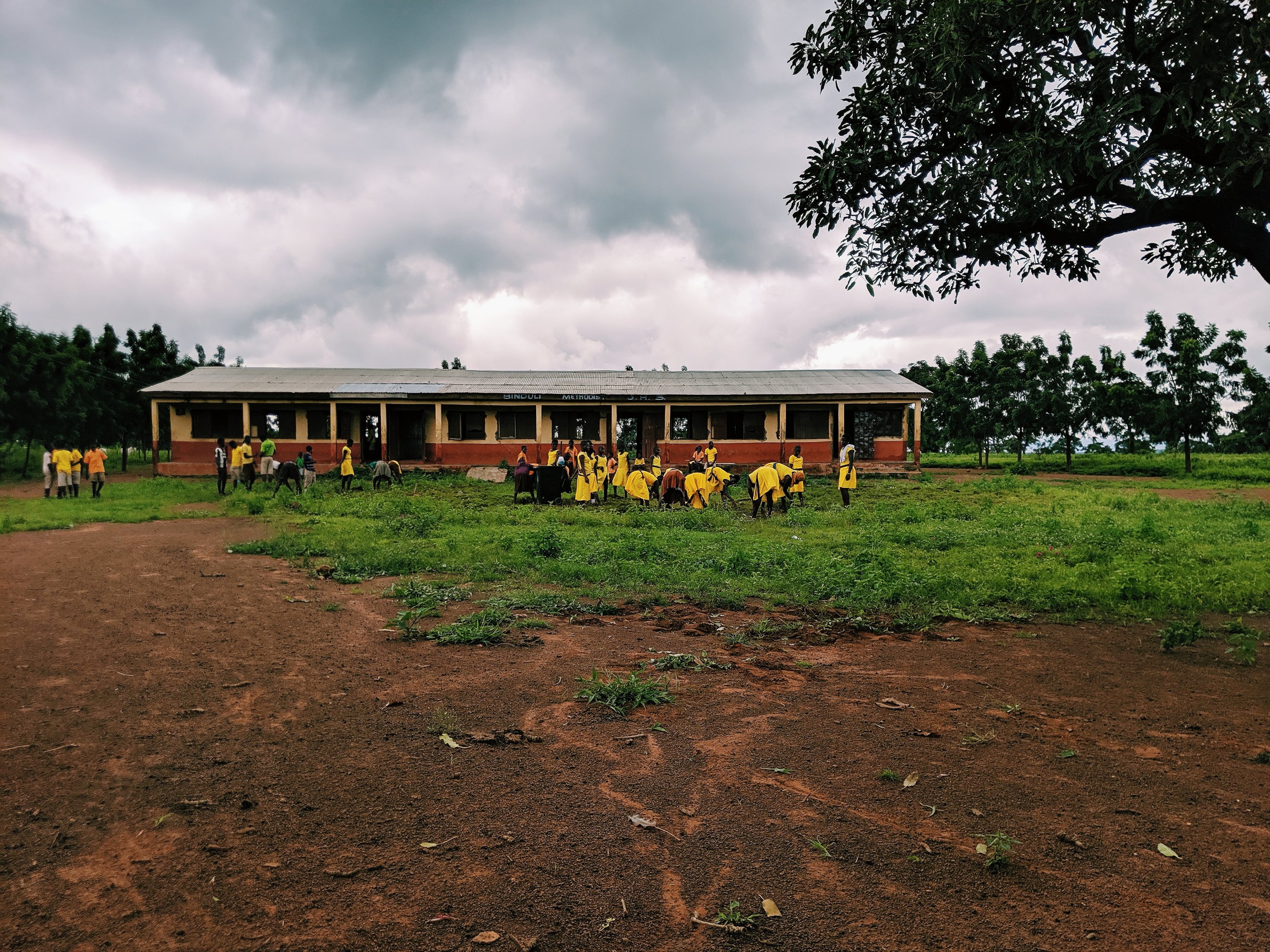
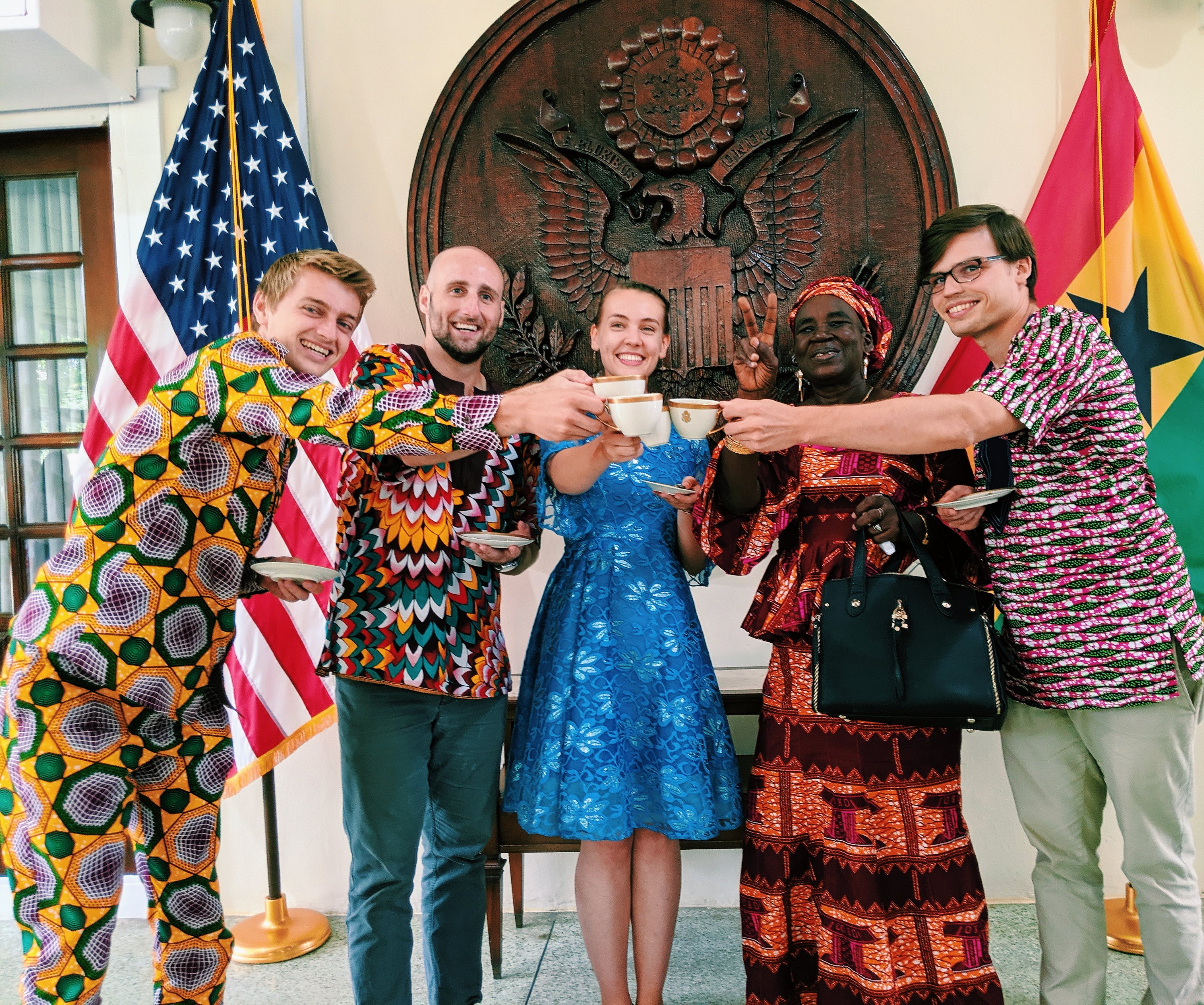
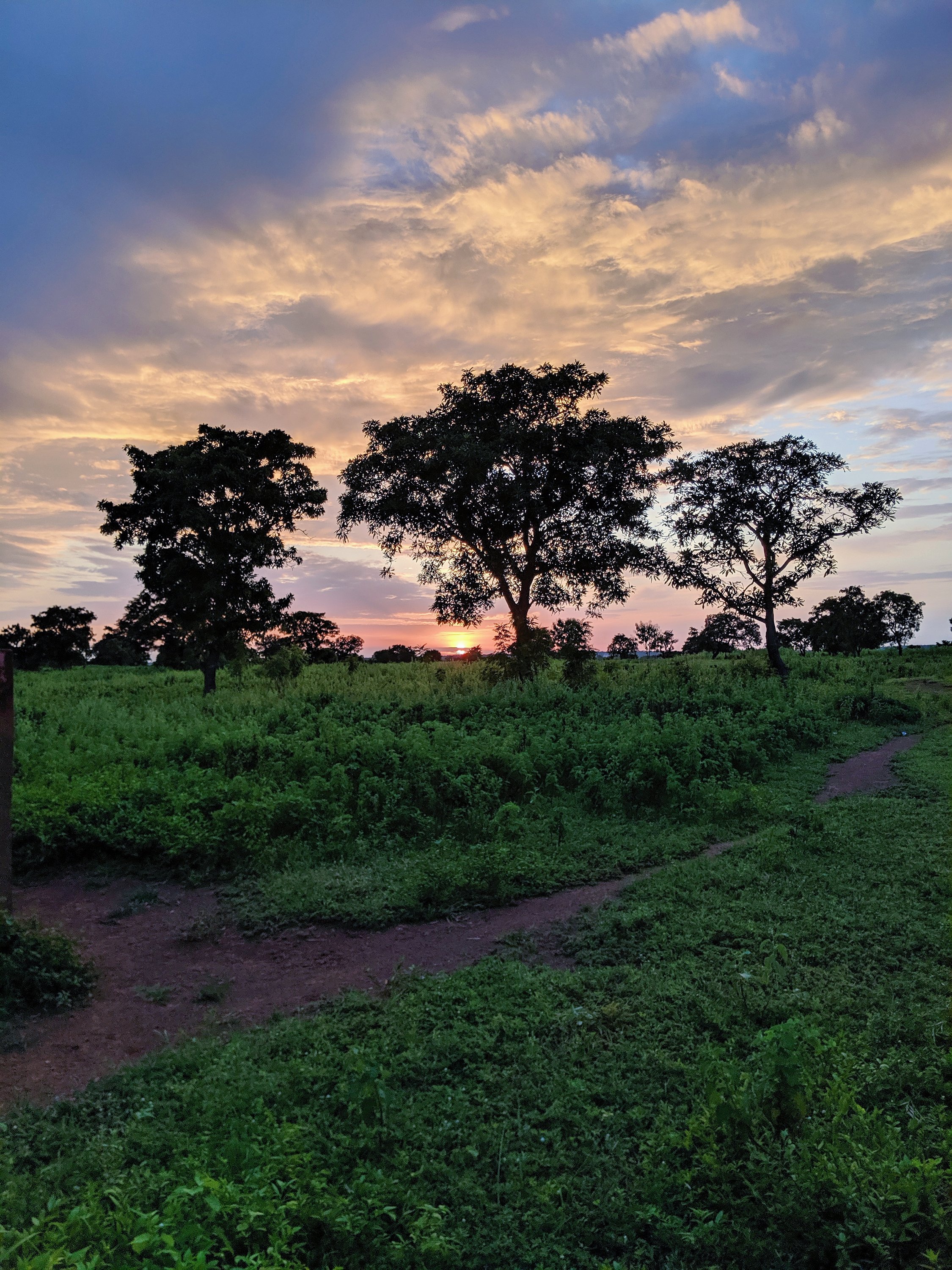
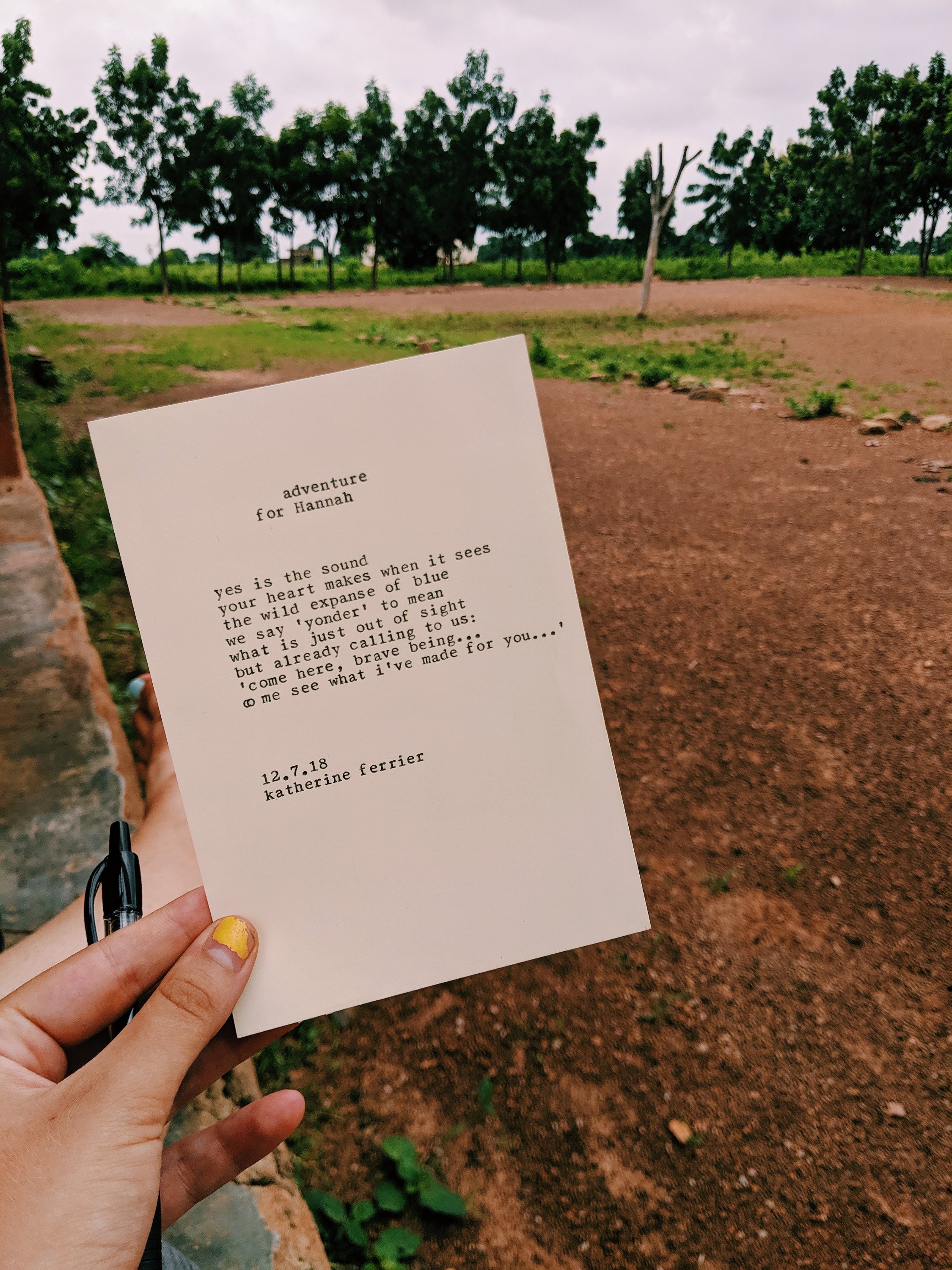
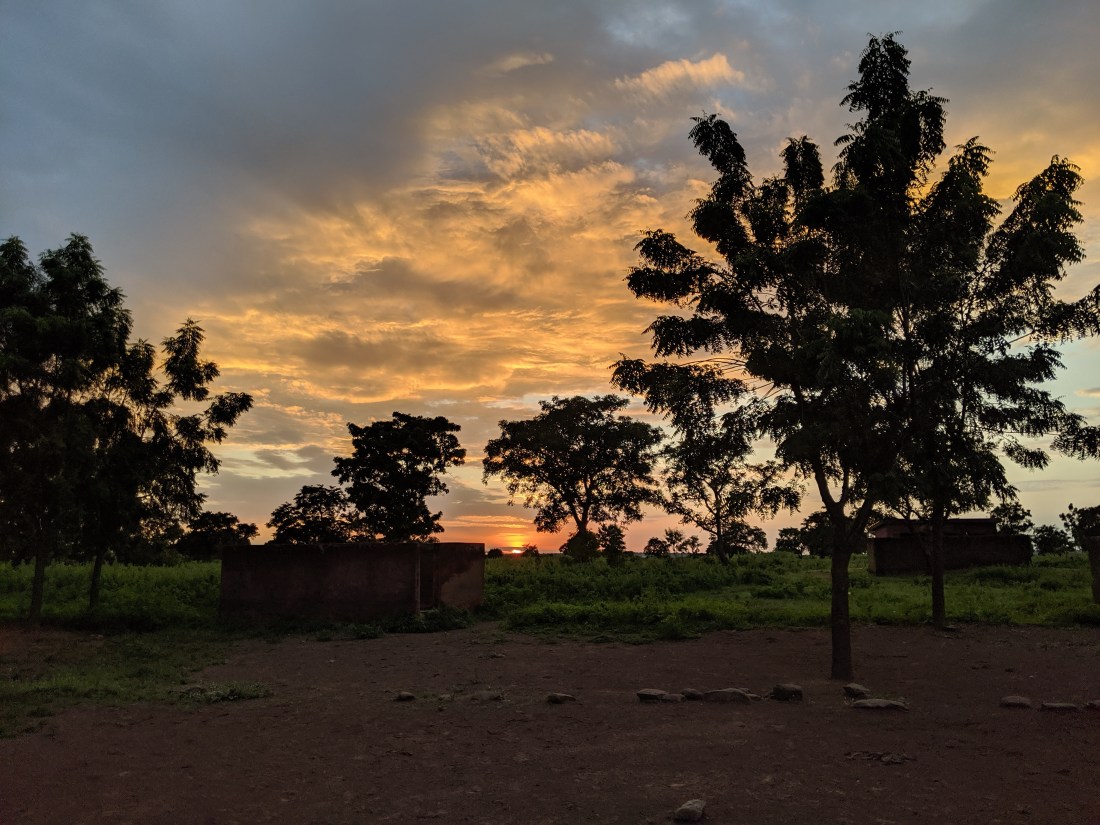
I’m currently working on writing several new posts but with school starting and a new puppy time is limited! So in the meantime please enjoy a few photos of how my days generally look!
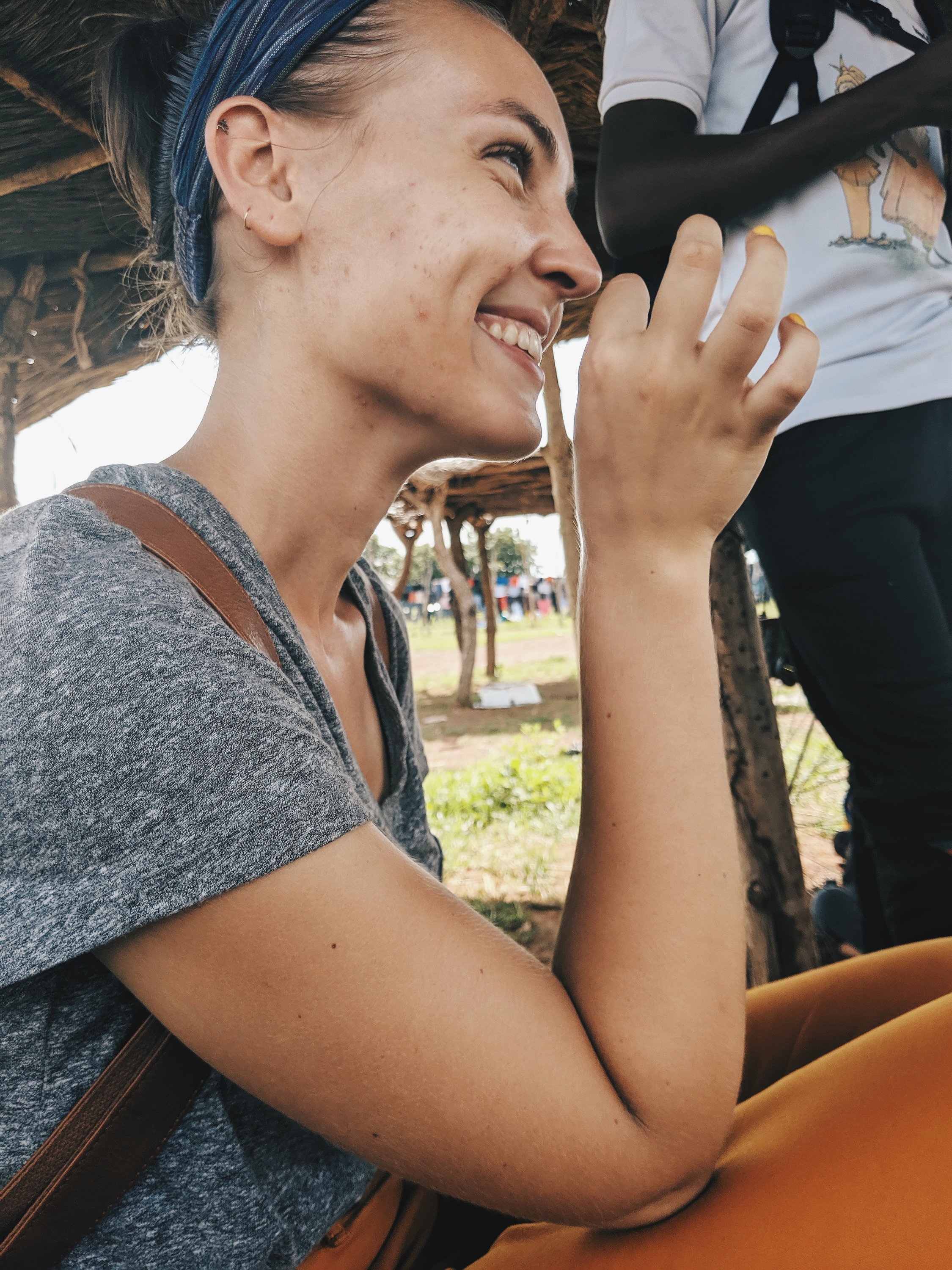
Popping the Bubble
Sweat is pooled on my upper lip from the bike ride down the flooded roads which took me from my own small community to this new one. Here is where my friend’s family lives, here is where the celebration is happening. Leaving our bicycles under a shady tree we visit the homes of those he knows from childhood. On the edge of one compound, surrounded by a small mountain of ground nuts sits a woman whose eyes shine pure white from underneath he sagging eyelids. She moves methodically, breaking open the shells of the legumes on the hard concrete beneath her. I sit on a plastic tub that once contained margarine, fielding questions as well as I can from those in the compound. Eventually the drums call us away, leading us to a small open patch of dirt and into a crowd.
Seven men march in a circle around a small pile of leaves and branches. There is also a small goat. It’s legs are tied together tightly so that it can do nothing but stare, eyes wide, at the circling group wielding knives and horns while the drummers beat furiously in the background. I stand among the children. They are calm as the energy grows in the space before us. When the knives swing downwards, they do not look away. I do. Two gunshots ring out loudly from next to the crowd. The green leaves of the pyre now dripping red. Slowly, each man bends down, hands tucked behind his back, drinking from a hollow gourd full of a cloudy liquid which sits next to the sacrifice. Then they begin to dance. Around and around the pyre, some spin, others move slower from the weight of many years of dancing. Eventually they start on their way, leading a parade of which I feel the only somber member, towards one of the compounds we have just come from.
Here is much of the same. Except where I am made to squat is merely feet away from where they let the blood drip onto pieces of the new yam. The elders offer me to drink from the calabash they all sip from, hopefully they were not offended by my knee-jerk reaction to decline the clouded water inside the dish.
There is a sound like a drum with no echo which rings out in no particular rhythm over the community. It is the sound of large pestles hitting the bottom of the hollowed-out tree trunks which hold slices of the newly blessed boiled yam. At each house, women surround these giant mortars, breaking the very smallest pieces of the yam down so that it comes together once again in a completely new texture. This is fufu. This is lunch. This is a meal to be worked for, sweated over, and shared with all who we know as family in this small place. I am glad to dip my fingers in the boiling liquid, letting the heat of the pepper singe the back of my throat long after the plate sits before me. The warmth of the food and community sits deep within my stomach as we leave this place, riding our bikes to the next community, passing by a small clinic focusing on maternal health where I hope to volunteer during my time here.
The sun just about to begin its descent when I pulled my bike up to the front gate of my compound. Strapped to the back sits a pile of eight yams which were gifted to me by several people along my journey. I do not know yet what I will do with them. For now they sit in a pile in the corner of my room, next to the plastic barrel which holds the water it is safe for me to drink.
I cannot pretend to understand or appreciate what I have seen. My stomach will never stop turning in summersaults at the memory of the day. The sounds of struggling goats resonates in every corner of my brain. But, while I cannot understand, I also cannot judge. I cannot pass judgement on these people, on their rituals, on their ways of life. The joy and excitement of the day is palpable in contrast to the dark cloud I fear hangs too low over my head. I try to bat it away, to paste a smile over the uneasiness which is plastered across my face. So for now I hold my place on the outskirts as a silent observer, focusing on the people, not the ritual, the joy and togetherness that each festival breathes new life into. This will not be the last time my brain has troubling understanding what is before my eyes. And for that I am grateful. There is much to this world that my tiny bubble butted up against. There’s so much more to the human experience than the western world I have called home for so long. I hope to feel uncomfortable as often as I feel anything else.
So far this has held true.
I suspect it will remain that way.
 Han in Dagombaland